It is highly likely that in the future—with artificial intelligence surpassing and replacing our own, and robots taking our jobs—our lives will be reduced, at least in Western countries, to that of mere consumers of mass media content. But this is the positive scenario, the best-case scenario. There is worse. Mass media content is, in fact, produced because there are those who, in one form or another, pay for its consumption—that is, purchase it. But if robots replace physical labor and AI replaces intellectual labor, then the production of wealth will remain in the hands of our artificial counterparts. The market will become a matter of buying and selling between computers and robots. Humans will be excluded from the production cycle and, consequently, from remuneration. The capitalist economy will change profoundly. We will no longer be able to acquire mass media content because we will have nothing with which to exchange for the purchase. The market—the omnipresent, omnipotent market—will remain only a memory of the past, because society will revert to a feudal system in the hands of those few who control robots and AI.
It appears that Elon Musk has announced that Tesla will build 1,000,000 Optimus all-purpose robots by 2030. Now, while it is true that scientific discoveries of the past have always required human personnel, it seems that robots are now crossing the line: if they can replicate every aspect of humans, then they can replace the human workforce.
But these won’t be the only problems. In fact, universal basic income—that is, a subsistence allowance for the unemployed to keep them from starving—has been on the horizon for some time. This might even include Netflix or Instagram bonuses. What could be problematic is that whoever produces 1,000,000 robots to sell them might also consider keeping them for themselves and becoming, as in the Middle Ages, a feudal lord. Or sell them all to a single customer who, in turn, will become the master of the world. The concentration of wealth among the economic elite makes this possible. According to GlobalFirePower, if we consider active-duty soldiers (excluding reserves), Mexico has an active military population of 387,000.
The United States (the world’s most powerful army) has 1,333,000, while Germany has only 184,000. If a single person could possess 1,000,000 robot soldiers, they could compete alone against a sovereign state. Of course, we know that in modern armies, technology is more valuable than human strength: but this worsens the situation. Because in that case, it is industry waging war against enemy industries. Thus, not an army representing a people, but a clash of industrial powers. And if industry realizes that it is the driving force of military history, then the owner of industrial resources can impose his power in an autocratic manner.
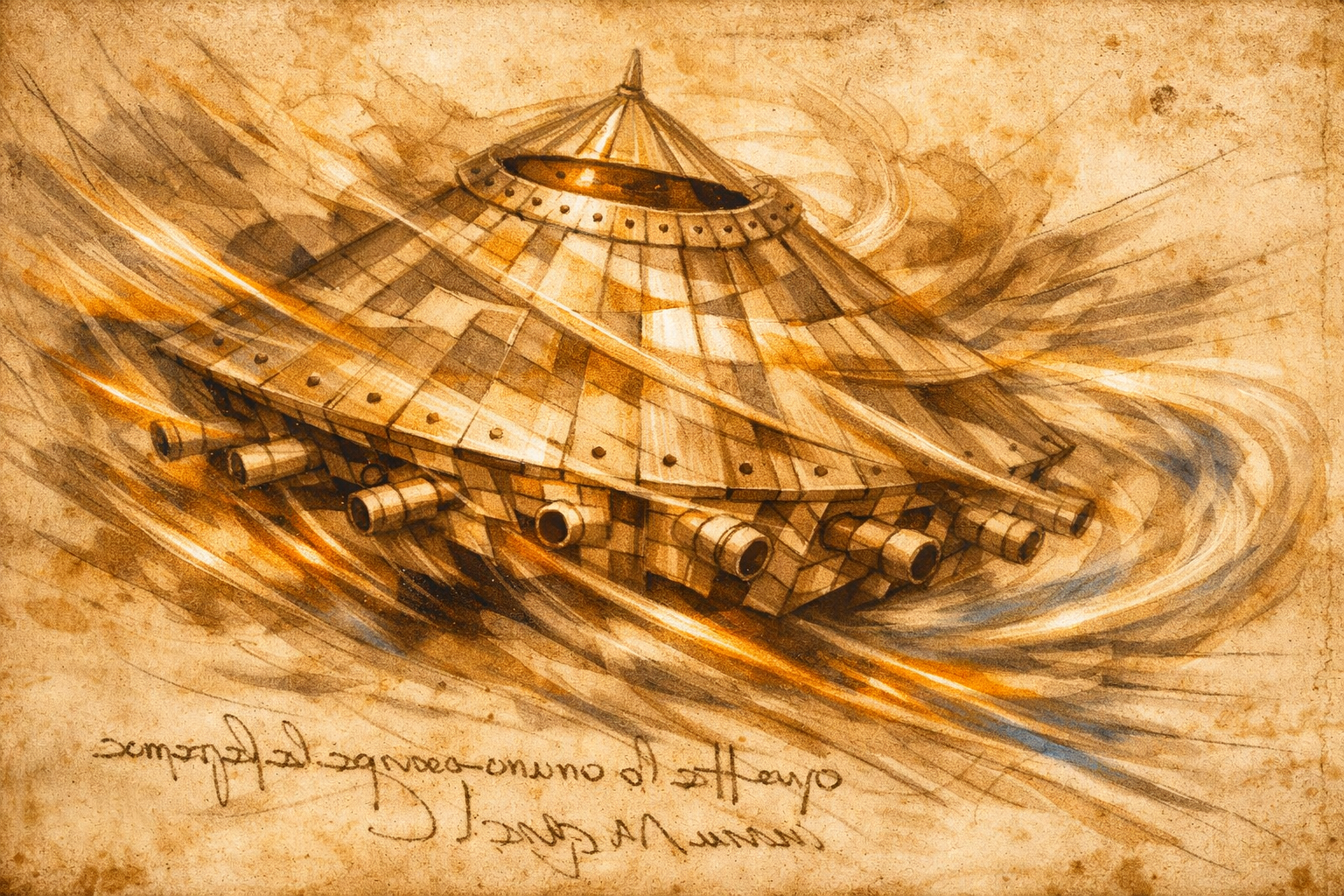
This problem had already come to light in the last century. Without its industry (think of the Krupps), the German army could not have fought with the force it demonstrated. But the Krupps built cannons; they had no soldiers to operate them. Now technology is even more pervasive; the supplier (of missiles, AI, aircraft, drones) becomes an essential element. If they can possess satellite networks of potential military use, executive robots, and Artificial Intelligence as a strategic mind, then we arrive at the conclusion that the power of a military force—which equals strategic minds + soldiers + technologies + procedures + financial base—becomes comparable to concentrations of industries that can possess all the elements described.
And if, as it appears today, law and sovereignty are considered less important than force, who will be able to stand in the way of one who possesses millions of robot-soldiers guided by a super-intelligence? Perhaps the concept of the common good? If a new “Prince”—of whom Machiavelli speaks—were to dominate the world, would he perhaps stop? Will the relentless concentration of immense wealth in the hands of a small number of people not make what seems like science fiction possible?
There is a possibility of witnessing a new transformation when the nations born of the Peace of Westphalia dissolve into a new fluid dimension where the powers that be reign across borders, unassailable, and likely autocratic. In this dystopian world, which seems impossible (yet we have witnessed horrors in the past that seemed impossible to us), it is clear that all the philosophical thought of the past centuries will be perceived as obsolete and out of place.
Liberalism, the Jacobin struggles, and the revolutions will be nothing more than a vague memory. Eighteenth-century philosophers will be remembered for their wigs and powdered curls. Everything will seem old—indeed, prehistoric—because a new history will be born then. The intellectual reflections of the great figures of the past will fade away under the weight of their distance from reality. Secular philosophies—those of Kant, Marx, or Nietzsche—will seem like the thoughts of grandparents, smelling of mothballs and wardrobes full of clothes no longer in fashion.
Only one central problem will remain for humanity (that which remains alive), and it will be the theological one. The transition to the new world, triggered by technology, does not seem likely to affect in any way that hidden, inner space where, as if we were sitting before the universe, we ask ourselves to know the One who gives us the desire to know Him and to know everything within ourselves and beyond ourselves.
Not even AI can give us answers, because they are merely data, facts, and logical deductions, but here we are dealing with experiences, with the knowledge gained from traversing the world. Our poor, fragile, sorrowful self—always in doubt, incapable of understanding yet yearning for something beyond, for growth, to rise above it all—still and always awaits a revelation and redemption, and knows for certain that it cannot come from technology, which simulates everything but carries no truth. This religious space will become ever more expansive, and will be unexpected for the world of tomorrow. Amid metal robots and Nvidia cards, the powerful will look with envy upon the poor, who will be the noblest and most serious of all.
Christianity, the religion of slaves and the illiterate, will once again begin its journey. For it is not data that saves us, but crossing the bridge over the abyss of life.
How to cite this article
Riccardo Colasanti MD. (2026, May 18). The Neo-Feudalism to Come. Rielo Institute for Integral Development. https://riidblog.org/post/18-05-2026/