The Weight of Freedom III

The Weight of Freedom III

This three part series explores the historic cycles of humanity’s return to a just social order and the nature and role of Freedom in Integral Development through the lens of the mystic inner life. The first and second part in “Essays”

The Inner Life Compels the Work of Integral Development
Now in the image of God, we must next take on the likeness of God and our cares expand exponentially beyond our small scope of self, of family, of community, of nation–to that of all humanity. Beholding all creation from the vantage point of Freedom, we are urged to create. We begin to sense the requisite next action: to bring beauty and order to God’s creation in all its aspects, for every person, and in all creatures, in every system, in every sphere: Integral Development.
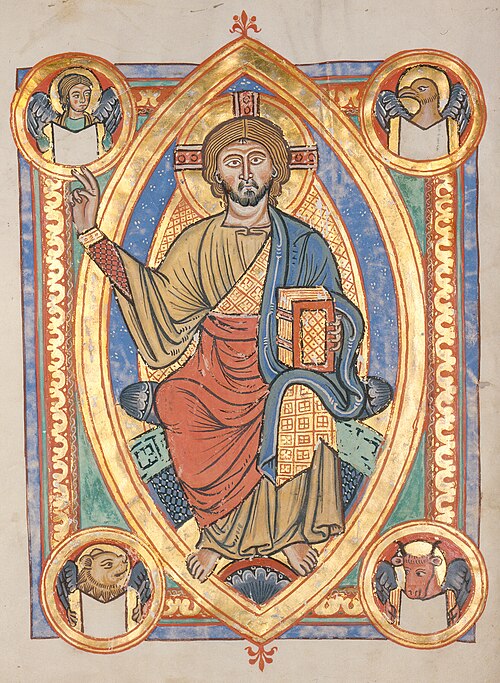
This new ultraconscious state is characterized by Absolute Freedom. Absolute Freedom is the consequence of achieving total equilibrium with the Source. It is the natural state that arises, as it is designed to arise, from the path that achieves perfect reflection of the Absolute. It is an emergent state of one who sees the face of God and still lives. It is the purpose of the vesica piscis: the place between from which new creation passes through, where spirit manifests into the physical realm. Behold the birth of the new man, birthing the Earth anew!
[Read More]

The Weight of Freedom: Freedom Emerges from the Inner Life 2

This three part series explores the historic cycles of humanity's return to a just social order and the nature and role of Freedom in Integral Development through the lens of the mystic inner life.

The Weight of Freedom: Freedom Emerges from the Inner Life 2

This three part series explores the historic cycles of humanity’s return to a just social order and the nature and role of Freedom in Integral Development through the lens of the mystic inner life. The first parte in “Essays”

Part II: Freedom Emerges from the Inner Life

Divine design shows us that Freedom is not an a priori condition, but an emergent condition. True Freedom is not a political right granted by a state document, but a spiritual byproduct of a soul coming into purity and alignment with the Divine Design. Freedom, in the divine order, is rather the effect, or the resultant state, of the interior life of prayer, meditation, and union with the Creator. It is the emergent state of a mind in habit of contemplation of Jesus Christ, who is the perfect reflection and living expression, in complete oneness with God the Father. This contemplation of the pure love of Christ for the Father, in turn purifies the interior state of the thoughts of the mind and aims the will toward the desires of God the Father. This contemplation returns our gaze to the Source of Light–whereas, in contrast, humanistic Enlightenment thinking focused our gaze on the outer reaches of any ray of light we so chose to follow away from the Source. Hence the rise of our cancerous multiplicity,1 which of course, we were free to follow.

[Read More]

The Weight of Freedom

This three part series explores the historic cycles of humanity's return to a just social order and the nature and role of Freedom in Integral Development through the lens of the mystic inner life.

The Weight of Freedom

Part I
The Return of Astraea: Divine Justice Anew
Everywhere we are now witnessing the collapse of the ideals of liberal democracy, and the rise and normalization of authoritarian rule. It appears that “the new order for the ages” has become old, and is soon to pass away. As liberal democracy falters, we look on in fear and question: Is this the end of human civilization? Is this the failure of the project of Integral Development? And rightly, we question: where did we go wrong? Let us not despair. Rather, let us recall that the promise etched into the Great Seal of the United States, Novus Ordo Seclorum,1 was adopted from the Roman poet Virgil when he wrote in 40 BC, “Magnus ab integro saeclorum nascitur ordo,”2 meaning, “The great order of the ages is born afresh,” or as others translate, “A great cycle of ages is born anew.”

When the world order that Virgil knew was collapsing, he was writing about a promise as he watched the Roman civil wars rip the empire apart. At this moment in human history, where all order is being upended, Virgil is both mourning a great loss and prophesying a new birth. For everything that begins, is born from the death of the last thing that had once also been the promised new beginning. Instead of the demise of a cherished world order, it is the phoenix rising from the ash that Virgil sets his eyes upon. It is precisely from this focus that he told a prophecy of a miraculous child that would usher in a Golden Age, a return of justice as Astraea, the goddess of justice, would return a peaceful, ancient reign of Saturn.

When Virgil in Eclogue IV heralds, “Now returns the virgin, returns the reign of Saturn. Alas, Astraea is descending back to Earth!” 3 Virgil was not focused on the ending. He was focused on a new beginning. Indeed, in the coming years, under Augustus’ new imperial rule, Rome witnessed justice and a golden age of peace was, at least for the time of the Flavian Dynasty, restored to the early Roman Empire. We can see this same promise of the return of peace after the great upheavals caused by Reformation, as Queen Elizabeth used Astraea imagery to indicate that she was the reincarnation of the star-maiden destined to bring divine justice to Britain.4

[Read More]

The Freedom That Kills

The Freedom That Kills

According to Pavel Florensky1, the “fundamental difficulty” of ancient metaphysics lies in how to reconcile unity with multiplicity.

Applied to the field of politics, this means figuring out how to integrate the unity of a nation, an institution, or a people with the multiplicity and pluralism of the differences that are part of it—namely, citizens, intermediate institutions, ethnic groups, and minorities.

A major transformation has taken place: for Plotinus, the One preceded being in ontological dignity. For postmodernists, all reality is an infinite difference where richness consists in not participating in a universal—that is, in nothing that is common to all.

[Read More]

Tired of freedom

Tired of freedom

We are truly tired of flowery rhetoric about freedom, self-actualization, and human rights. Not because these are undesirable realities or shamefully incomprehensible concepts. On the contrary, they are aspects of life that we strive to preserve, nurture, and make possible so that others may enjoy or attain them. Rather, I am referring to the fact that, in the name of freedom, self-realization, and elegant discourse on human rights, we have been subjected to a sordid practical relativism, to living life any which way, to justifying ourselves to avoid the harsh blow of correction, failure, or sin. I speak as a child of my time. I grew up amid the escalating clash of ideas, the allure of self-assertion, and the dream of freedom. I was repeatedly told that I must seek what fulfills me, what makes me feel good, and what showcases the best of me to everyone. My failures are not mistakes; they are “areas of opportunity.” My sins are not moral breaches, but mere products that necessarily stem from my weakness. Whatever I decide is fine, as long as it springs from the core of my creative will. But few have directed my heart outward from itself, to where Truth dwells. For if it is true that Truth dwells within the inner man—as Augustine says—Truth is at once what is more intimate than one’s own intimacy and the highest transcendence, beyond every limit of my being. True interiority is always ecstatic, always outside of itself, always seeking beyond boundaries of every kind: conceptual, ontological, moral, spiritual.

[Read More]