Individualism and Human Rights

Individualism and Human Rights

The Declaration of Human Rights did not stem from any specific philosophical or religious stance, but rather emerged in response to the great horrors of World War II. Since the articles of the Declaration make fairly precise prescriptions regarding the political system, it would not be logical—unless one wishes to fall into circular reasoning—to seek the foundation of the Declaration in the very political ideal it proposes. However, despite this form of “ideological neutrality,” even a first glance at the text reveals some of the document’s underlying assumptions.

[Read More]

The Weight of Freedom III

The Weight of Freedom III

This three part series explores the historic cycles of humanity’s return to a just social order and the nature and role of Freedom in Integral Development through the lens of the mystic inner life. The first and second part in “Essays”

The Inner Life Compels the Work of Integral Development
Now in the image of God, we must next take on the likeness of God and our cares expand exponentially beyond our small scope of self, of family, of community, of nation–to that of all humanity. Beholding all creation from the vantage point of Freedom, we are urged to create. We begin to sense the requisite next action: to bring beauty and order to God’s creation in all its aspects, for every person, and in all creatures, in every system, in every sphere: Integral Development.
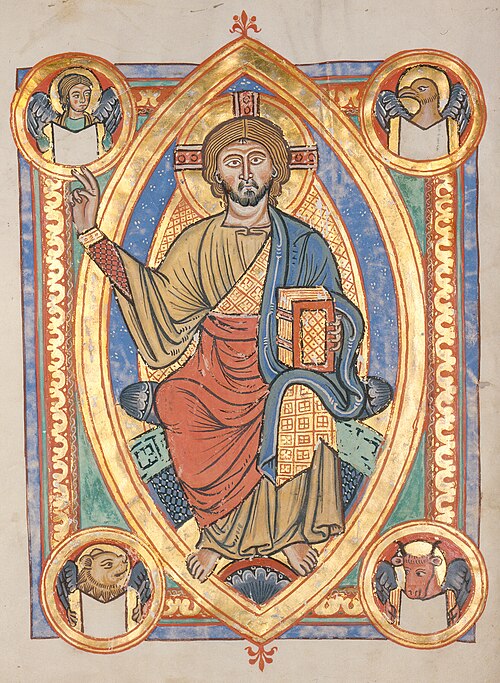
This new ultraconscious state is characterized by Absolute Freedom. Absolute Freedom is the consequence of achieving total equilibrium with the Source. It is the natural state that arises, as it is designed to arise, from the path that achieves perfect reflection of the Absolute. It is an emergent state of one who sees the face of God and still lives. It is the purpose of the vesica piscis: the place between from which new creation passes through, where spirit manifests into the physical realm. Behold the birth of the new man, birthing the Earth anew!

[Read More]

The Weight of Freedom: Freedom Emerges from the Inner Life 2

This three part series explores the historic cycles of humanity's return to a just social order and the nature and role of Freedom in Integral Development through the lens of the mystic inner life.

The Weight of Freedom: Freedom Emerges from the Inner Life 2

This three part series explores the historic cycles of humanity’s return to a just social order and the nature and role of Freedom in Integral Development through the lens of the mystic inner life. The first parte in “Essays”

Part II: Freedom Emerges from the Inner Life

Divine design shows us that Freedom is not an a priori condition, but an emergent condition. True Freedom is not a political right granted by a state document, but a spiritual byproduct of a soul coming into purity and alignment with the Divine Design. Freedom, in the divine order, is rather the effect, or the resultant state, of the interior life of prayer, meditation, and union with the Creator. It is the emergent state of a mind in habit of contemplation of Jesus Christ, who is the perfect reflection and living expression, in complete oneness with God the Father. This contemplation of the pure love of Christ for the Father, in turn purifies the interior state of the thoughts of the mind and aims the will toward the desires of God the Father. This contemplation returns our gaze to the Source of Light–whereas, in contrast, humanistic Enlightenment thinking focused our gaze on the outer reaches of any ray of light we so chose to follow away from the Source. Hence the rise of our cancerous multiplicity,1 which of course, we were free to follow.

[Read More]

The Weight of Freedom

This three part series explores the historic cycles of humanity's return to a just social order and the nature and role of Freedom in Integral Development through the lens of the mystic inner life.

The Weight of Freedom

Part I
The Return of Astraea: Divine Justice Anew
Everywhere we are now witnessing the collapse of the ideals of liberal democracy, and the rise and normalization of authoritarian rule. It appears that “the new order for the ages” has become old, and is soon to pass away. As liberal democracy falters, we look on in fear and question: Is this the end of human civilization? Is this the failure of the project of Integral Development? And rightly, we question: where did we go wrong? Let us not despair. Rather, let us recall that the promise etched into the Great Seal of the United States, Novus Ordo Seclorum,1 was adopted from the Roman poet Virgil when he wrote in 40 BC, “Magnus ab integro saeclorum nascitur ordo,”2 meaning, “The great order of the ages is born afresh,” or as others translate, “A great cycle of ages is born anew.”

When the world order that Virgil knew was collapsing, he was writing about a promise as he watched the Roman civil wars rip the empire apart. At this moment in human history, where all order is being upended, Virgil is both mourning a great loss and prophesying a new birth. For everything that begins, is born from the death of the last thing that had once also been the promised new beginning. Instead of the demise of a cherished world order, it is the phoenix rising from the ash that Virgil sets his eyes upon. It is precisely from this focus that he told a prophecy of a miraculous child that would usher in a Golden Age, a return of justice as Astraea, the goddess of justice, would return a peaceful, ancient reign of Saturn.

When Virgil in Eclogue IV heralds, “Now returns the virgin, returns the reign of Saturn. Alas, Astraea is descending back to Earth!” 3 Virgil was not focused on the ending. He was focused on a new beginning. Indeed, in the coming years, under Augustus’ new imperial rule, Rome witnessed justice and a golden age of peace was, at least for the time of the Flavian Dynasty, restored to the early Roman Empire. We can see this same promise of the return of peace after the great upheavals caused by Reformation, as Queen Elizabeth used Astraea imagery to indicate that she was the reincarnation of the star-maiden destined to bring divine justice to Britain.4

[Read More]

Are we still human?

Until the end of the history

Are we still human?

It is always terrible to see how humanity, generation after generation, finds its greatest aspiration in war, murder, and destruction. In the annihilation of part of itself. One might say, “It’s not my fault. It’s the other who is my enemy, and therefore I must crush him like a poisonous plant.”

This is the same argument used by Cain when questioned by Yahweh after spilling Abel’s blood, who gave the surprising answer, “Who made me my brother’s keeper?”

[Read More]

The relentless cycle of pain

how many generations will have to suffer?

It seems that so-called political realism is in vogue, i.e., that there are no laws or rules to protect us, but that it is only important to know how to navigate the conflictual sea of reality, where nothing but force and power make sense. That men, after such a long journey, return to the club, the stone, and the machete is indicative of a regression to the devastating powers of instinct, but also of an intolerance towards what had been the liberal canon in recent years, made up of a dense web of rights, which, however, had been transformed into the garment that Deianira sent to Hercules, a garment soaked in the poison of Naxos. Poison that killed Heracles.

[Read More]

Human geese

Road Closed

Human geese

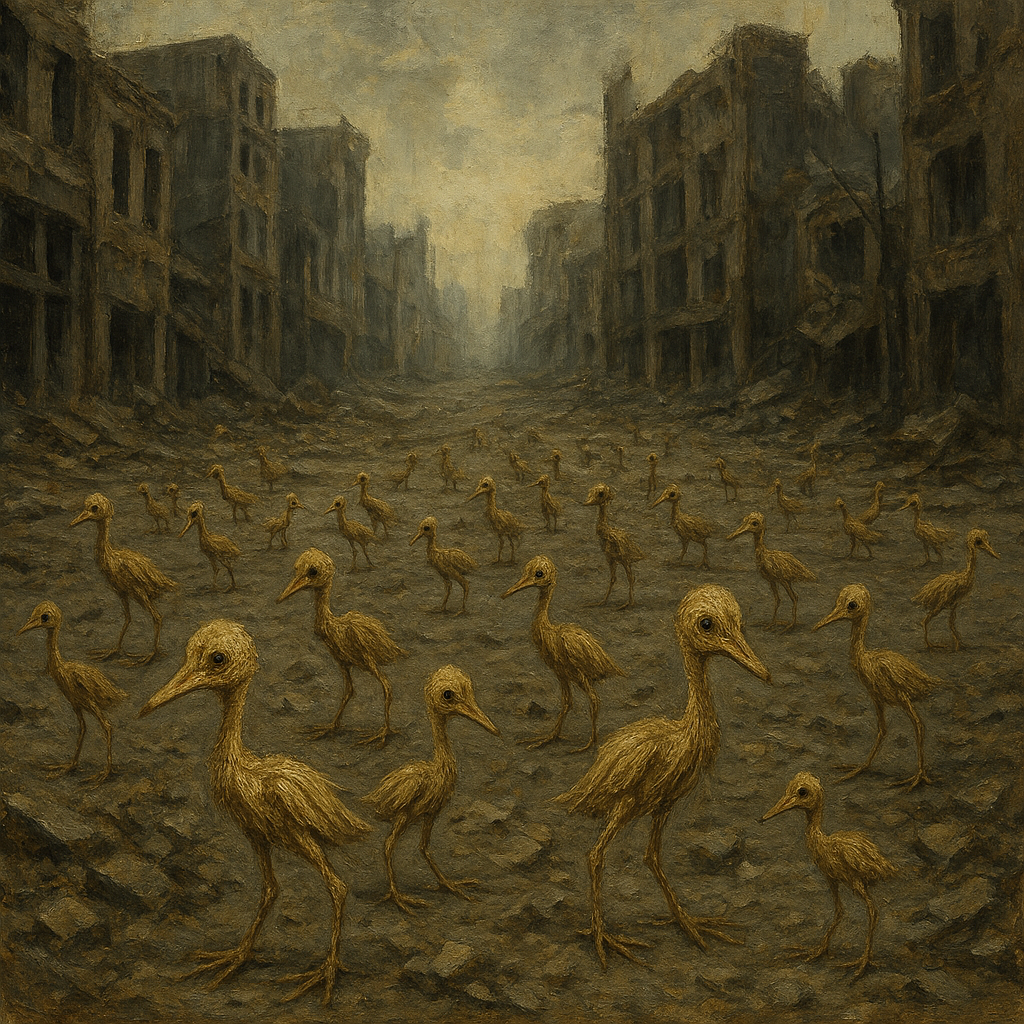
Those who go against justice are like wild beasts to other men. With sharp teeth and sweaty, shivering skin. The harshness of strong men, their animal nature, which nothing can stop because they are dominated by their passions, is that of The Genealogy of Morals, when Nietzsche states that evil birds love lambs, “because there is nothing more delicious than a tender lamb.”

This principle of forced saturation of one’s own being, this revelry to the point of bursting, eating everything, digesting everything, destroying everything, could be mistaken by some unhappy people for some kind of greatness, like towering above ordinary mortals. But the light is given to tyrants by mediocrities. The demigod, the superman, needs crowds of cheering mediocrities to praise and support him.

[Read More]

The autor has passed away

Best wishes!

The autor has passed away

The year 2026 will likely mark the beginning of a new era, one of artificially produced literature that is indistinguishable from text written by humans. As the practice of writing with AI becomes more widespread, it will no longer be possible to distinguish between the human and the artificial. Everything will be open to question.

Only works written before 2026 will be able to be attributed with certainty to a human author. But after 2026, we will no longer be able to be sure. A new era is dawning.

[Read More]

Artificial intelligence, a perfect false spiritual friend

What a future awaits us!

Teaching

Referring to the relationship between doctors and cancer patients, the president of the Rome Medical Association recently stated that it is “a relationship […] that becomes fundamental, and patients, especially those who have suffered from cancer, know this perfectly well. I also say this to send an important message: artificial intelligence will never be able to replace or surpass this empathetic relationship between doctor and patient. Being able to talk, caress, comfort, and have contact is very positive.”[1]

[Read More]

Innocence to be regained

Money won't save us

Joy

After the Second World War we witnessed the aggregation of local markets into universal markets. This trend was driven by at least two postulates: that the market for all would be the secret formula for success and that a liberal guiding nation had been given the mission from heaven to lay down the rules and set the game.

Aggregation was seen as a good thing, as progress exported to peoples who, while maintaining a certain identity of their own, finally accepted the idea that their world was not the ‘right’ one, but that what was right was aggregation behind a demigod-nation that would lead everyone to the highest peaks. So, union of markets and hegemony of a nation.

[Read More]