In A. Stanton’s animated film Wall-E (Pixar, 2008), the little robot Wall-E (Waste Allocation Load Lifter – Earth Class) is the last robot that, for 700 years, has been compacting with its mechanical arm the garbage covering planet Earth, turning it into cubes and stacking them into towers of waste. In 2105 planet Earth is buried in rubbish, pollution has reached unsustainable levels, and the Buy ’n Large Corporation, which rules the world, has put all of humanity aboard the spaceship Axiom to save it from death; only the robots have been left on Earth, with the task of clearing it of waste. Over time the robots have shut down; only Wall-E has kept on storing the garbage. Wall-E’s solitary life on the planet abandoned by human beings takes an unexpected turn when the little robot Eve arrives from a spaceship, tasked with finding traces of life on Earth. Wall-E falls in love with Eve and lives moments of great tenderness. On Earth the trace of life will be found that brings human beings back and saves them from life aboard the Axiom: an existence without motivation, spent in high-tech armchairs, ruled by robots that take care of everything and make every decision.
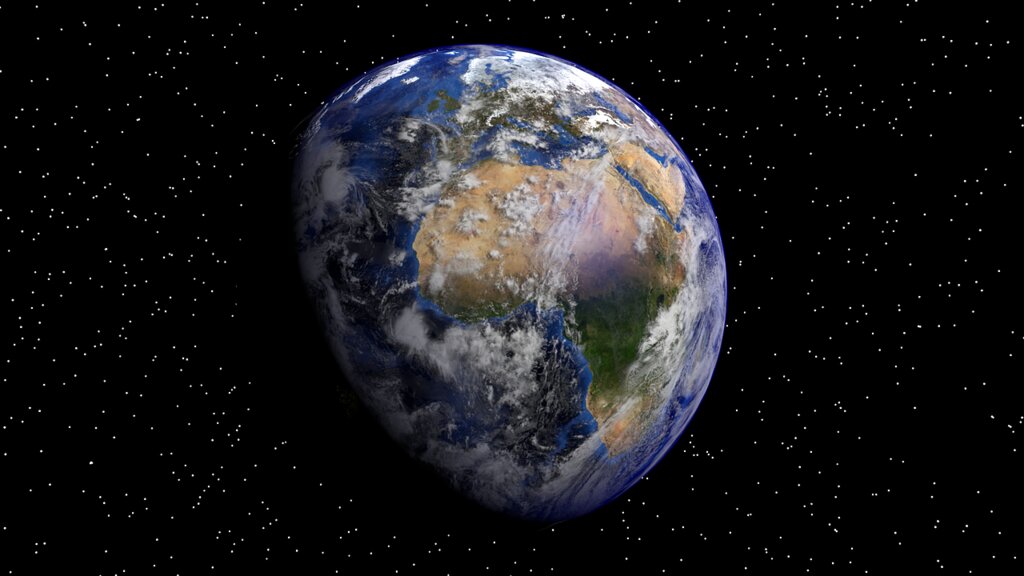
The images of this film, which offers much food for thought, seem to provide a counterpoint to Pope Francis’s words in Laudato Si’: “The earth, our home, is beginning to look more and more like an immense pile of filth”1. Our wonderful planet is unwell: wounded, plundered of its resources, violated, it is living through a crisis that calls for great attention and a new way of seeing. With the encyclical Laudato Si’, in 2015, Pope Francis set out the inseparable link between the crisis of the environment and that of society: there is, Francis writes, “one complex crisis which is both social and environmental.” From this observation and from the awareness that “everything is connected” comes the concept of integral ecology1.
The term ecology (from the Greek oikos, “house,” and logos, “discourse”) was coined in 1866 by the biologist E. Haeckel to designate the scientific study of the interaction between the environment and living beings. Integral ecology is concerned not only with environmental problems (the climate crisis, deforestation, loss of biodiversity, pollution, waste disposal) but also with the consequences that environmental degradation has on people, above all on the most fragile and poor. In a degraded environment there can be no development, no guarantee of fundamental rights, no justice. The care and custody of our common home cannot be separated from the care of persons, from respect for their dignity, from the promotion of their development and of the common good. “The environmental crisis is an anthropological crisis and is tied to the model of development: the structural causes of an economy that does not respect the human person must be eliminated” (Pope Francis, Laudato Si’, 2015). Integral ecology and integral human development are connected.
In the encyclical Magnifica Humanitas, Pope Leo XIV reaffirms this idea: “the cry of the earth and the cry of the poor”1 cannot be separated.
“In this light,” Pope Leo writes, “the universal destination of goods returns to the foreground, together with the critique of a technocratic paradigm that claims to reduce everything to an object of domination, the defense of human labor threatened by the logic of waste, the need for justice between generations, and the call for a genuine dialogue between politics and economics” (M.H., 43)2.
On 2 September 2026 the International Theological Commission published the document Caring for Our Common Home: A Responsible and Fraternal Response to the Triune God, which offers arguments for considering the “theological foundation of the care for our common home (…) inscribed in God’s plan for creation”3. The document consists of three chapters; its preface highlights the loss, in recent years, of the perception that nature is created by God, and the resulting change in how we see the relationship between humanity and creation. The social and ecological crisis affecting the whole planet reflects the crisis in humanity’s relationship with God, with itself and with other creatures.
Creation: The Work of the Triune God
The document highlights “the Trinitarian character of creation.” According to Sacred Scripture, not only the human being but all of creation bears the imprint of the Trinity. “In the Trinity everything is governed by gift and by love”3: if the human being and creation are made in the image of the Trinity, they share in the same relational dynamic of love and self-giving; this is why we can say that the human being is “constitutively made for relationship” and that all of creation is interconnected. “The life of the planet, of which human life is a part, is sustained in a ‘communal’ way thanks to the balance of a wide range of interdependent and interwoven relationships. Nothing and no one is an absolute monad. Everything is interrelated”3.
Creation and the Physical Origin of the Universe
Creation, understood theologically, defines the metaphysical relationship by which everything created “receives its own being from God.” The text makes clear that, as regards the physical origin of the universe, God cannot be placed at the beginning of cosmic events or “used” to explain what science is still investigating about the origin of the universe; God is “not one cause among causes, but the transcendent foundation of the being of all causes”3. Cosmology investigates scientifically what happened in the primordial phases of the universe; faith affirms its metaphysical foundation.
The Urgency of Ecological Conversion
The scientific data on the planetary ecological crisis are alarming, and the solutions offered by the most advanced science and technology risk being ineffective unless we adopt a new vision of our relationship with the Earth and new cultural values, arriving at what Pope Francis called an “ecological conversion.” We need a paradigm that rejects both the “predatory anthropocentrism” that damages creation and wounds creatures, and the “biocentrism” that idolizes nature. In the perspective of a “situated anthropocentrism,” as Pope Francis put it, the human being is a “steward of creation.” Caring for our common home belongs to the journey of faith, to a right relationship with God, with oneself, with other creatures and with creation. Listening to the cry of the earth and to the cry of peoples who are exploited and deprived of their dignity grounds the ethical principle of ecological commitment and of the promotion of life and human development.
Francis of Assisi and a Gaze in Love with Creation
Ecological conversion entails a mental and spiritual change that leads to a loving gaze upon creation and upon human beings, especially the poorest.
Francis of Assisi offers a sublime witness in this sense. His love for all creation and for the poor is rooted in his love for Christ, in his conformity to Christ.
His Canticle of the Creatures springs, as J.-P. Sonnet observes, from a mystical experience4: at a moment of great suffering Francis feels consoled by Christ, and mystical poetry, love and praise burst forth in his soul.
Most High, all-powerful, good Lord,
Yours are the praises, the glory and the honor,
and all blessing.
To You alone, Most High, do they belong,
and no man is worthy to mention Your name.
— Francis of Assisi
Pope Francis, Laudato si’. Lettera enciclica sulla cura della casa comune, San Paolo, 2015. ↩︎ ↩︎ ↩︎
Pope Leo XIV, Magnifica Humanitas. Lettera enciclica sulla custodia della persona umana nel tempo dell’intelligenza artificiale, LEV, 2026. ↩︎
International Theological Commission, Prendersi cura della nostra casa comune: risposta responsabile e fraterna al Dio trinitario, published on Vatican.va, 2 September 2026. ↩︎ ↩︎ ↩︎ ↩︎
P. Boitani, G. Bonfrate, J.-P. Sonnet, Il Cantico delle creature e la poesia del mondo, Vita e Pensiero, 2026. ↩︎
How to cite this article
Cristina Scorrano. (2026, November 25). Listening to the Cry of the Earth and the Cry of the Poor. Rielo Institute for Integral Development. https://riidblog.org/post/25-11-2026/