Part I
The Return of Astraea: Divine Justice Anew
Everywhere we are now witnessing the collapse of the ideals of liberal democracy, and the rise and normalization of authoritarian rule. It appears that “the new order for the ages” has become old, and is soon to pass away. As liberal democracy falters, we look on in fear and question: Is this the end of human civilization? Is this the failure of the project of Integral Development? And rightly, we question: where did we go wrong?
Let us not despair. Rather, let us recall that the promise etched into the Great Seal of the United States, Novus Ordo Seclorum,1 was adopted from the Roman poet Virgil when he wrote in 40 BC, “Magnus ab integro saeclorum nascitur ordo,”2 meaning, “The great order of the ages is born afresh,” or as others translate, “A great cycle of ages is born anew.”
When the world order that Virgil knew was collapsing, he was writing about a promise as he watched the Roman civil wars rip the empire apart. At this moment in human history, where all order is being upended, Virgil is both mourning a great loss and prophesying a new birth. For everything that begins, is born from the death of the last thing that had once also been the promised new beginning. Instead of the demise of a cherished world order, it is the phoenix rising from the ash that Virgil sets his eyes upon. It is precisely from this focus that he told a prophecy of a miraculous child that would usher in a Golden Age, a return of justice as Astraea, the goddess of justice, would return a peaceful, ancient reign of Saturn.
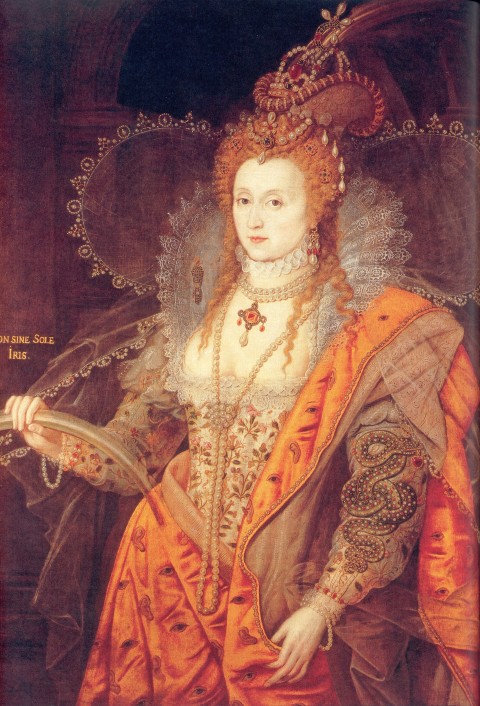
When Virgil in Eclogue IV heralds, “Now returns the virgin, returns the reign of Saturn. Alas, Astraea is descending back to Earth!” 3 Virgil was not focused on the ending. He was focused on a new beginning. Indeed, in the coming years, under Augustus’ new imperial rule, Rome witnessed justice and a golden age of peace was, at least for the time of the Flavian Dynasty, restored to the early Roman Empire. We can see this same promise of the return of peace after the great upheavals caused by Reformation, as Queen Elizabeth used Astraea imagery to indicate that she was the reincarnation of the star-maiden destined to bring divine justice to Britain.4
In fact, we can look back at a cycle that shows us that about every 250 years, when Pluto enters Aquarius noncoincidentally, human civilization undergoes upheavals that give way to a rebirth of a more divinely ordered civilization. We’ve seen the pattern play out for millenia: first, the people become uneasy, eventually life becomes unbearable, unjust systems are challenged, justice is yearned for, and what was once accepted is no longer tolerable. And humans cry out for the return of Astraea. A return of justice is demanded.
There is no coincidence that in the last transit of Pluto through Aquarius, Americans adapted the motto from Virgil to indicate their belief that by creating a constitutional republic free from European monarchy, they were successfully inviting Astraea back to Earth, ending a corrupt old era.
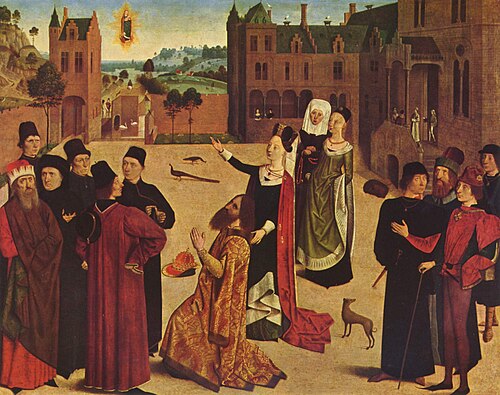
L'imperatore Augusto e la Sibilla Tiburtina, del Maestro della Sibilla Tiburtina, 1476, Städel Museum
So, are we due again for this return to justice? Should we dare to hope for such a revitalization of human dignity the world over? Surely! But, that is not the question really, is it? We are due: we are in an era (Pluto entered Aquarius in 2023 and stays in the constellation until 2044) that shows us all the signs of divine possibility: vast technological advances, systems are showing rupture and beginning to decentralize (i.e. cryptocurrency), and people from all four corners of the Earth are pushing for community-driven power. These are the telltale responses to Pluto in Aquarius energy, and the telltale signs that Astraea’s return, if she will still have us, is inevitable.
But how will this shift toward justice come and when we emerge, what will we have established as a new order? These are the questions before us now. And we can look back at the historical Pluto transits in Aquarius to gain a clue. When we look back, we discover a theme: each time Pluto transits Aquarius (lasting approximately 19 to 22 years in its modern orbits) a period of massive revolution, egalitarian shifts, and intellectual enlightenment is ignited. Thus, we can look back at these periods of time and wonder: Will there be bloody revolts, as there were in the American and French Revolutions during the 1777-1798 CE transit? Will there be the violent dismantling of old, controlling doctrines as it was during the Reformation and Counter-Reformation during the 1532-1553 CE transit? Will we redefine territorial boundaries as we did across feudal Europe between 1286-1308 CE? Will there be a great separation of powers, as it was in the East-West Schism between 1041-1063 CE? A legal and educational renaissance as under Charlemagne from 795-819 CE? Something similar to Justinian’s legal revolution between 550-574 CE which became the foundation of modern law? Perhaps our shift to justice will mirror the Christianization of an empire as we saw under Constantinople between 305-329 CE? Or will we rebuild a vast golden Roman society as was seen under the Flavian Dynasty which began in 69 CE when the Roman Senate officially declared Vespasian emperor in the middle of the 60-85 AD Pluto transit in Aquarius?
It is impossible to say how a just society will take a new form, but we can turn our eyes in these despairing times back to Astraea. We can–as Virgil did, as Queen Elizabeth did, as the American Founding Fathers did–intentionally invite her again to return to the Earth that she has left because she could no longer bear our corruption, lawlessness, violence, and war. Or, we can choose to give in to this present chaos and burn along with it down to the ashes. No, God forbid! Let us come together and see: is it possible again for Astraea to return and usher in a new era of divine justice?
Yes, of course! We know that all things are possible. We know that we can choose, as we have always chosen, the shape and structure of this world. Truly, if this is what we want, it is what we shall have.
So, then, let us believe now already in the return of Astraea acknowledging that not if, but when she returns, she comes with terms. She will grant us a new era, and she demands we consider and choose wisely the rationale–the very thoughts that will collectively fill our minds–the logic that will rule our hearts. For it is this collective consciousness that will shape our new era, so we should reason it out carefully, understanding better now than ever before in human history the best functions of law, governance, and all manner of just social order.
What exact changes will come is impossible to guess at the first steps of a new era. However, when the phoenix rises, she comes from the ash of what preexisted her. So, what will be comes from what has been: dissolved, reconfigured, and born anew, as a butterfly from the chrysalis. This is the phoenix rising. So to consider what can be reconfigured and birthed anew as a just human society, let us examine what has been birthed before.
To do this, let us take up first the underlying premise of “Freedom” in our aging liberal order, because from this premise unfolds the understanding of the objective of the inner life and the manner by which we will attempt to actually achieve Integral Development.
The (Re)Birth of an Era: Reconsidering Freedom
Let us first accept that the last conception of Freedom, found in our Enlightenment thinkers which led to modern liberal democracy was flawed. Rousseau pushed the logic to its breaking point with The Social Contract (1762), wondering: What if not only is absolute monarchy not divinely ordained, but what if real freedom requires direct representation and the subordination of the individual’s freedom can only rightly be required for the interests of the Collective Will?5 It is not good logic, for we can see its flaw in its first test: the radical freedom torn from the monarchs of France, gave way almost immediately to the Reign of Terror.
Do we not see and even now we fearfully experience this flaw in the concept of Freedom at the global scale? Netanyahu, Putin, Trump: do they not say the same as Robespierre? I take your freedom based on our social contract: I do this for the common good of the people! That is a lie now just as much as it was under Robespierre. Nevertheless, it is convincing because we hold the lie, unexamined in our inner life, our inner beliefs, and our collective consciousness. We need to fashion anew our Common Sense!6
What are we to do? Revolt? Locke argued (1689) that revolt is our right as he justified the English Civil War.7 Revolt! Reclaim our freedom! No, that is madness, we cannot revolt and hope to establish a better rule in the current paradigm. The fissures in our current system are known now. They have been forced open and exposed and openly manipulated. The flaw in the logic of our Freedom and so-called “social contract for the common good” cannot be unknown. No, we must now acquire a better logic that can guide our hearts and hands to create a better system of governance. Before us–in anticipation of Astraea’s return–we have a heavy responsibility. We must begin by reexamining (and thus reconfiguring from the ash) Freedom.
Hence, let us leave off Enlightenment thinking. It has led us astray–away from the source of light and toward the dark corners of humanistic desires, justifying as Riccardo Colasanti, MD, has recently outlined, a multiplicity of individualism; i.e., The Freedom that Kills ,8 like cancer, every aspect and prospect for Integral Development. Heaven forbid! Let us return to the Source, let us return to divine revelation and the sacred knowledge shunned for an entire epoch, to understand and find once again the true nature of Freedom. From this point, we can understand anew the objective of the inner life and illuminate our approach to Integral Development.
So, let us reconsider Freedom. From whence does Freedom arise? What are its requisite conditions? And, what are the natural consequences of individual Freedom? To answer these questions, let us retrace our steps and look to what was abandoned by the Enlightenment thinkers. At what point did they diverge from sacred knowledge and divine revelation? From that point of divergence, we can reconstruct its original precepts in the revealed divine design of creation. And in recounting our steps, let us lay our foot once again upon the divine path.
We diverged at a point of illusion. There is an enticing premise in modern liberal democratic thinking, formed in the Enlightenment, that posits Freedom as an inherent human asset used to negotiate a social contract. This deeply rooted, yet deeply flawed concept claims that individual autonomy is the starting point, the antecedent from which civil liberties are built. Essentially it states: because we are born free, freedom must be granted and protected against any governance that would usurp our freedom for its own uses. Thus, supposedly, each individual has the right to reclaim and protect their freedom.
Humanistic thinking required such a perception. Freedom as an antecedent, as a self evident truth, was required to safeguard against the violations of human dignity experienced under absolute monarchy. It was under this banner that Locke began to justify the English Civil War and the logic by which all “revolutionary” violence has been justified since: You can’t take my freedom, you know it is my right! If you try and stop me, I’m gonna fight!9
It was such a lovely illusion we wove to veil our eyes from the bloodshed.
Perhaps, let us not be too hard on the work completed by our Enlightenment journey. Where do we find ourselves now, but as the Monkey King, returned unwittingly to Lao-Tzu–the superior trickster god?10 What have we revealed by our journey to Enlightenment, except that which was already known? Where do we locate ourselves, but where we were always located within: upon His palm. The Source is both the beginning and the end. The Creator’s design is plainly found in every molecule, every leaf, every petal, every tree, animal, and biosphere. It is written across the cosmos and observed in the galaxies and found from the most gargantuan of black holes down to the quarks, and all their quirks, hidden until observed, vanishing into incoherence at the fluctuation of their entangled pairs. We now more fully understand, with absolute clarity, through our centuries of disciplined empirical study, the grandeur of creation’s design. For this, we can be grateful.
Yet, at the same time, the Enlightenment thinkers, in their eagerness to cast off the atrocities of their subservience to absolute monarchy–the supposed divine right to rule, guide, and protect the corrupted nature of man (Hobbes, 1651)11–and reclaim man’s nature (reasonably good, it was supposed by Locke12, and even perfectible it was reasoned by Rousseau13) also tossed out the proverbial baby with the bathwater. It was timely and necessary thinking on the value and potential of man, but with it we also foolishly cast off the precept of Imago Dei and all its rights and responsibilities contained therein to the individual. This is our hubris: we attempted to liberate the Man even from the divine design of creation, and thus his entire objective and purpose within creation before God the Father was forfeited and forgotten. Freedom was lost; we gave its name to multiplicity.
So, let us reconsider Freedom not as an unalienable right that precedes human civilization which must be safeguarded; instead, let us consider Freedom through a higher law to find if it has any value, and if it does, its rightful place in the establishment of a new order of civilization.
Second part follows
Continental Congress. (1782). Great Seal of the United States [Artifact]. U.S. Department of State. ↩︎
Virgil. (2008). The Eclogues and Georgics (A. S. Kline, Trans.). Poetry in Translation. (Original work published ca. 38 BCE) ↩︎
Virgil. (1997). The Eclogues (J. Smith, Trans.). In A. R. Jones (Ed.), Classical Roman Poetry (pp. 45–48). Academic Press. (Original work published ca. 38 BCE) ↩︎
Yates, F. A. (2010). Astraea: The imperial theme in the sixteenth century. Routledge. (Original work published 1975) ↩︎
Rousseau, J.-J. (2004). The social contract (M. Cranston, Trans.). Penguin Books. (Original work published 1762) ↩︎
Paine, T. (1986). Common sense (I. Kramnick, Ed.). Penguin Books. (Original work published 1776) ↩︎
Locke, J. (1988). Two treatises of government (P. Laslett, Ed.). Cambridge University Press. (Original work published 1689) ↩︎
Riccardo Colasanti MD. (2026, July 5). The Freedom That Kills. RIIDblog. https://riidblog.org/post/05-07-2026 ↩︎
Freedom fighter lyrics. (n.d.). Genius. Retrieved July 13, 2026, from https://genius.com/Rainbow-freedom-fighter-lyrics. ↩︎
Yang, G. L. (2006). American born Chinese. First Second. ↩︎
Hobbes, T. (1996). Leviathan (R. Tuck, Ed.). Cambridge University Press. (Original work published 1651) ↩︎
Locke, J. (1988). Two treatises of government (P. Laslett, Ed.). Cambridge University Press. (Original work published 1689) ↩︎
Rousseau, J.-J. (2019). The discourses and other early political writings (V. Gourevitch, Ed. & Trans.; 2nd ed.). Cambridge University Press. (Original work published 1755) ↩︎
How to cite this article
Sarah Pattison PhD. (2026, July 24). The Weight of Freedom. Rielo Institute for Integral Development. https://riidblog.org/post/24-07-2026/