There are questions that, because of their radical nature, strike us, prompt us to pause and reflect, and present themselves as valid questions—questions born of authentic thought that opens the way to inquiry and the search for new ideas and perspectives. These are not rhetorical questions, but genuine ones that tap into the desire for truth and point the way forward.
The question that gives this post its title—posed by Pope Leo XIV in the introduction to the book “Disarmed and Disarming” 1—is a crucial question for every person and calls for ethical responsibility. Can the human race continue to inhabit the Earth by recklessly exploiting its resources, plundering it, and applying the logic of domination and profit, while continuing to bring destruction and death through the countless wars that ravage the planet? Does war make sense? What about global rearmament? Is peace possible?
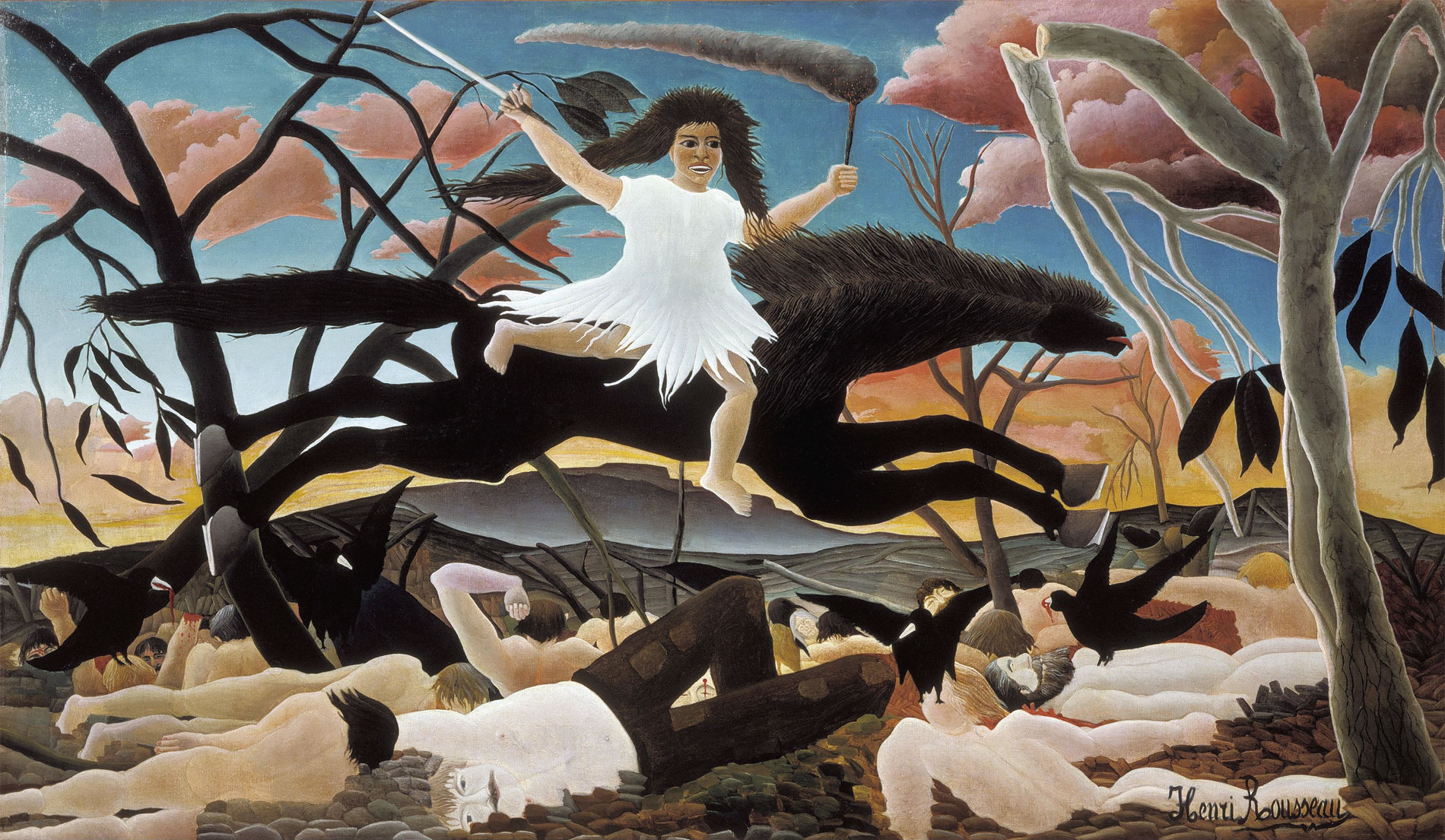
James Hillman, author of the book “A Terrible Love of War” 2, opens his essay with a description of a scene from Schaffner’s film “Patton, General of Steel”, in which the general contemplates the destruction of a battlefield and exclaims: “How I love all this.” The text explores the phenomenon of “war” in its universal and meta-historical dimension, in its inherent connection to the human spirit of combat, “to the martial state of the soul” 3—which is seduced and driven by the desire to dominate others and seeks, throughout various historical eras, different justifications for the violence and oppression perpetrated, almost always with the aim of restoring a new and more stable state of peace. “Unless we delve into this ‘mad’ love for war,” Hillman asserts, “we will never be able to prevent it or speak sensibly about peace and disarmament”4. This mad love is rooted in mythological archetypes, Eros and Thanatos, which continue to live on in the human mind. To gain a deeper understanding of humanity’s attraction to war, let us follow Hillman’s argument, which addresses two paradoxes: “war is normal” and “war is inhuman”. War has always existed; Heraclitus states that “War, the conflict (Polemos) of all things, is the father”—war is inherent in all things, in the world outside us and within us. If humans have a social nature, if—as Aristotle asserts—they are “political animals,” and if war “is the continuation of politics by other means” (Von Clausewitz), we can affirm that war is inherent to human nature. “There is no need,” Hillman argues, “to seek its causes in the irruption of the Id against the Superego, in male castration anxieties, in paranoid projections, in overcompensated feelings of inferiority, nor to attribute it to testosterone.” The unconscious foundations of war most likely lie in our failure to grasp the full extent of our animal nature: in not knowing or not wanting to understand that our animality is not simply hateful and bestial, but harmoniously attuned to war, because we are each a politikòn zoon.”5. M. Foucault posits war as the foundation of the state and social order: “The history that sustains and determines us takes the form of war rather than language: relations of power, not relations of meaning.” War, therefore, seems to be more “normal” than peace. Furthermore, one must consider that the “word ‘peace’ is all too readily equated with ‘security’—a security acquired at the cost of civil liberties”6
When speaking of war, one cannot overlook its “inhuman face” (J. Keegan) with its terrible characteristics: intentional cruelty, coercion, and depersonalization.
The inhumanity of war knows no bounds; it feeds on itself through blind violence and the terror it sows. Humanity, in its uniqueness, disappears; cruelty manifests itself in murderous planning, rapes, and massacres of innocent civilians. “War is an act of force, and there is no logical limit to the application of that force” (Von Clausewitz). Technology applied to war can vastly amplify its inhuman face. Hillman wonders whether it is legitimate to imagine that humanity’s aspiration for an end to all war—“Never again war!”—might become a reality, and whether the inhumanity of war can “be countered with the human structures of love and reason”7. It is urgent that humanity, aware of the risks to which it is exposed, resort to reason to build a future of peace.
If humanity wishes to continue inhabiting the Earth, the imperative: “No more war!” must become a reality; pursuing peace by rejecting violence and policies based on rearmament must be considered the only path to salvation for humanity.
To date, according to the Global Peace Index 2026, 103 countries are involved in acts of war. Over the past ten years, military spending has risen to $2,718 billion, representing 2.5% of global GDP 8. “War,” says Pope Leo XIV, “inflicts wounds that damage the entire fabric of life, affecting not only individuals and communities but also their broader network of relationships with the entire human family and their harmony with creation. It reveals a profound failure to live in the image and likeness of God, to respect life, and to care for the Earth entrusted to us. It is not only a political failure, but also a moral and spiritual one. Rooted in distorted desires and a misuse of human freedom and power, war stands as a counter-witness to the Gospel of Peace” 9. Peace is a gift of the Risen Christ; it demands a conversion of the heart; it is nourished by small gestures of love and care; it is unarmed; it is not imposed by force or violence; it is disarming, like goodness, like the mystery of the Child God. “It is the disarming path of diplomacy, mediation, and international law”10. Our species will be able to continue inhabiting the Earth if, together, we build a world of peace in truth, justice, and hope; if, as the Pope hopes, each person makes peace “the cause of their own life” 11.
Leo XIV, Unarmed and Disarming: Peace Is a Gift, edited by A. Banfi, LEV, 2026 ↩︎
J. Hillman, A Terrible Love of War, Adelphi, 2005 ↩︎
Ibid. ↩︎
Ibid., p. 11 ↩︎
Ibid. ↩︎
Ibid., p. 51 ↩︎
Ibid., p. 260 ↩︎
Leo XIV, Message for the LIXth World Day of Peace, 2026 ↩︎
Leo XIV, Message for the 11th World Day of Prayer for the Care of Creation, 2026 ↩︎
Leo XIV, Message for the 59th World Day of Peace, 2026 ↩︎
Leo XIV, Unarmed and Disarming: Peace Is a Gift, edited by A. Banfi, LEV, 2026 ↩︎
How to cite this article
Cristina Scorrano. (2026, August 22). Should the human race continue to inhabit the Earth?. Rielo Institute for Integral Development. https://riidblog.org/post/22-08-2026/