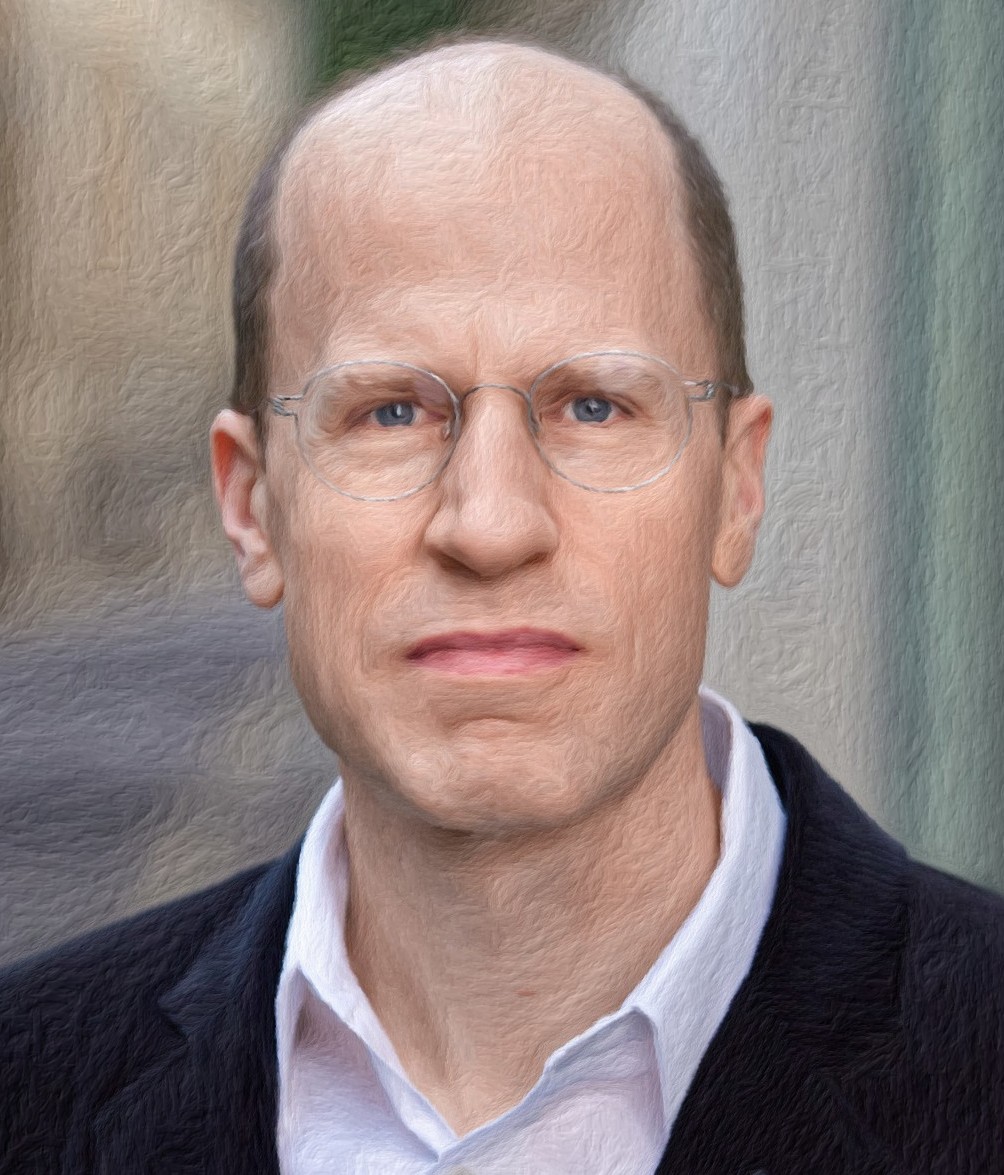
In his book Why I Want to Be a Posthuman, Swedish philosopher Nick Bostrom describes the posthuman reality as follows: “You’ve just celebrated your 170th birthday and feel stronger than ever. Every day is a joy. (…) You’re communicating with your contemporaries using a language (…) that allows you to share and discuss thoughts and feelings that unenhanced humans couldn’t even conceive of or experience. When you play with your friends, you feel that every fiber of your body and mind is pushed to the limits of creativity and imagination, and you’re creating new realms of abstract and concrete beauty that humans could never (literally) dream of. You’re always ready to empathize with those who are suffering and to work hard to help them get back on their feet. (…) Things are getting better, but every day is already fantastic.”
The development of digital technologies, biotechnologies, and AI has led philosophical research to ask questions about the nature of humanity, the possibilities for enhancing human intellectual and physical capabilities, the hybridization of humans with machines (cyborgs), and the potential scenarios shaped by the evolutionary advancement of the human species. It is not easy to define “Posthumanism” and “Transhumanism” due to the plurality of perspectives and conceptual nuances presented by various authors; generally speaking, Posthumanism presents philosophical elements that theorize the overcoming of anthropocentrism and the transition of human beings to a new evolutionary stage through human-machine and human-nature hybridization; Transhumanism, favoring a scientific perspective, focuses on the possibility of creating an enhanced human being with the aid of the most advanced technologies (biotechnology, nanotechnology, computer science, and cognitive science).
Pope Leo XIV, in the encyclical Magnifica Humanitas, drawing attention to the narratives put forward by posthumanism and transhumanism, arrives at the following important conclusions: these schools of thought constitute “the ideological backdrop that permeates certain centers of technological power” and, as a result, can influence decisions in the economic, social, and political spheres; through the media, they can “colonize the collective imagination,” fostering a vision of the future centered on the potential of new technologies capable of producing an “enhanced human” or a “hybrid human” fused with machines, capable of overcoming every human limitation—including illness, aging, and death.
A brief reflection on the concept of “limit” is necessary. Etymologically, there are two terms to consider: “limes” means “boundary” and “limen” means “threshold”; a “limit” can be what demarcates or what opens up new spaces.
I asked the AI about the limits of humanity in posthumanism and transhumanism; here is the response verbatim:
Posthumanism: the limit as the end of anthropocentrism
Crisis of the human: humans are no longer the center of the world
Fusion with the system: human subjectivity dissolves into a complex network alongside machines and the environment
Ontological transcendence: the idea of human essence collapses; identity fragments into hybrid or digital forms of life
Transhumanism: limits as obstacles to be corrected; physical and cognitive limits (disease, aging, death) as negative barriers to be broken down**
Continuous enhancement: technology improves human performance
Modifiable body: the body becomes an open-ended project, a set of data to be optimized or replaced
Technological Transcendence: the ultimate goal is a post-biological state (cyborg) to achieve earthly immortality.
Let us recall the techniques—already in use in the United States—of rapid freezing (at a temperature of 196 degrees below zero) after death; in Alcor More’s laboratories, cryopreserved bodies are defined as “patients in a state of biostasis” .
Viewed through this lens, the limit is not “the place where the human being matures and opens up to relationship,” as Leo XIV states in Magnifica Humanitas, but rather the place of the denial of the limit and, naturally, of the pain and failure inherent in the human experience. Man’s limited nature opens him up to relationship, to the search for truth, and to transcendence. “Human beings do not flourish in spite of the limit but through the limit.” The encyclical leads us to reflect on the value of the limit in rediscovering our humanity and on the danger of thinking of human beings as beings made of matter to be manipulated or reprogrammed.
Vulnerable people might be considered useless, an obstacle to the perfection of the species. It is in extreme situations—in illness, finitude, and death—that human beings discover their capacity for compassion and love, test their faith in God, and experience their creatureliness and their humble yet magnificent humanity.
The Pope’s words are enlightening: “We must make a clear distinction: it is one thing to integrate technologies into a human and relational vision; it is quite another to allow ourselves to be guided by a mindset that devalues limits and promises a purely technical ‘salvation.’”
“God speaks to each person only before they are created; then He walks with them in silence through the night. (…)
Driven by your understanding,
He goes to the very limit of your longing;
give me a garment.
(…) Let everything happen to you: beauty and terror.
One must always go on: no feeling is ever too far away.
Do not let yourself be separated from me.
Near is the earth, which is called life. You will recognize it by its solemnity.
Give me your hand.”
(Rainer Maria Rilke)
N. Bostrom, Why I Want to Be a Posthuman When I Grow Up in B. Gordijn, R. Chadwick (eds.), Medical Enhancement and Posthumanity, Berlin–New York, Springer 2008, 113, cited by G. Cucci, S.J. in: Postumano e Transumano. L’antropologia del futuro? in La Civiltà Cattolica, 2022, n.4130.
Leo XIV, Magnifica Humanitas, LEV ed., 2026** (nos. 115, 116, 117, 118, 120.)
How to cite this article
Cristina Scorrano. (2026, September 17). The Human Boundary Between Posthumanism and Transhumanism. Rielo Institute for Integral Development. https://riidblog.org/post/17-09-2026/