We are truly tired of flowery rhetoric about freedom, self-actualization, and human rights. Not because these are undesirable realities or shamefully incomprehensible concepts. On the contrary, they are aspects of life that we seek to protect, enhance, and make possible for others to enjoy or attain. I am referring, rather, to the fact that, in the name of freedom, self-realization, and an elegant discourse on human rights, we have become subject to a sordid practical relativism, to living life any which way, to justifying ourselves to avoid the bitter pill of correction, of judgment, of sin.
I speak as a child of my time. I have grown up amid the escalating clash of ideas, the allure of self-affirmation, and the dream of freedom. I have been told repeatedly that I must seek what fulfills me, what makes me feel good, and what puts the best of me on display for all to see. My failures are not mistakes; they are “areas of opportunity.” My sins are not moral lapses, but mere products that necessarily arise from my weakness. Whatever I decide is right, as long as it springs from the core of my creative will. But few have directed my heart away from itself, to where Truth dwells. For, while it is true that She dwells within the inner man—as Augustine says—Truth is at the same time the innermost part of one’s own intimacy and the supreme transcendent, beyond any limit of my being. True interiority is always ecstatic, always outside of itself, always seeking beyond boundaries of every kind: conceptual, ontological, moral, spiritual.
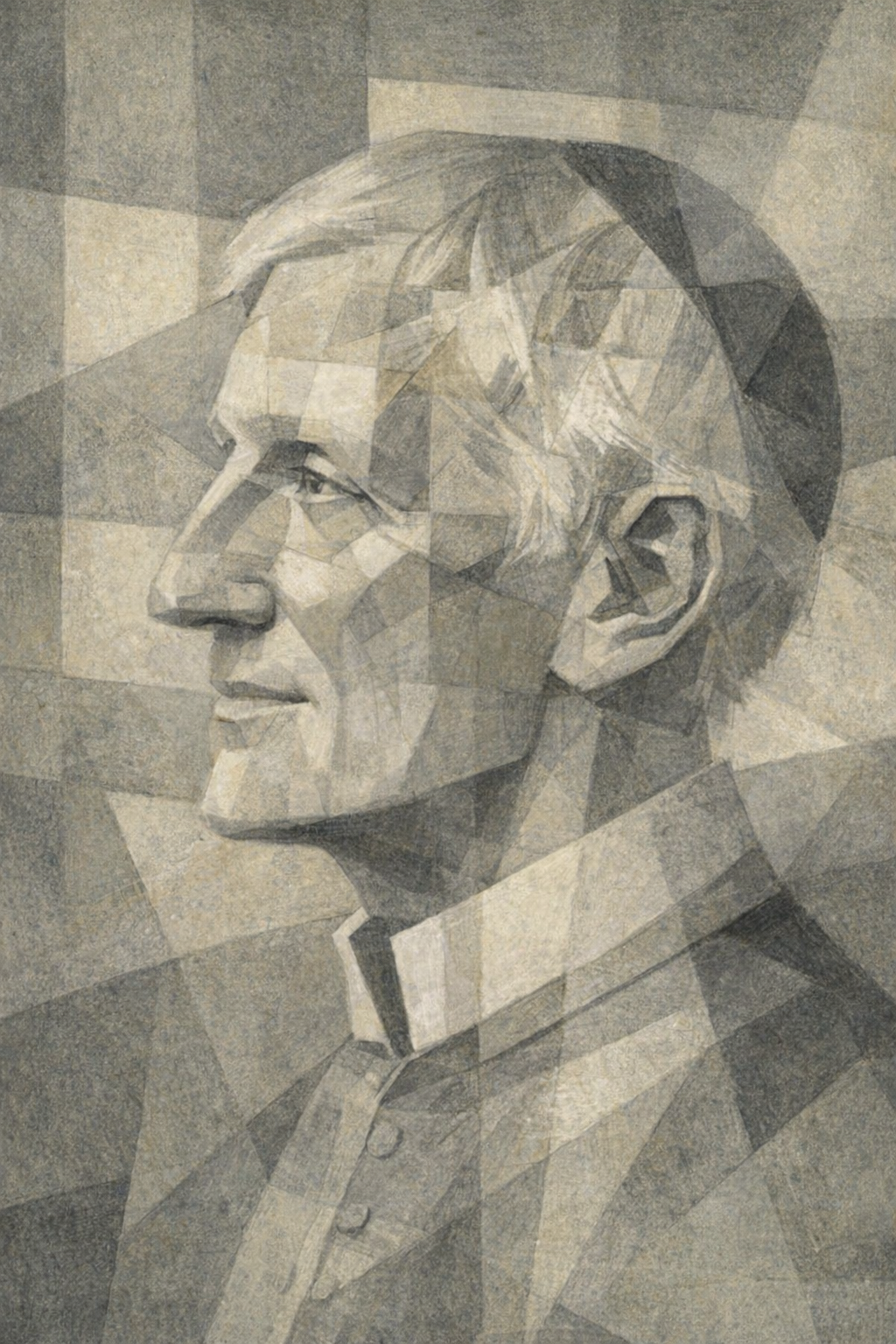 Card. Newman
It is precisely at this point that I find the issue of human rights to be flawed. They have been made to rest upon themselves; they have been given an enchanting veneer that promises intellectual and social satisfaction, a convenient standard for those of us who, in addition to good intentions, possess wild instincts. They seem like a reverse Pandora’s box: nothing but good can come from human rights, and anyone who appeals to them to justify their existential and social positions will undoubtedly obtain the best possible good, for it is the safeguarding of an unquantifiable value. Is this not the very same illusion that anything freedom decides, provided it emerges from its core of creativity, is legitimate and valuable? The fact is, if anything human is allowed to rest solely on itself, it ends up becoming sick, for we need truth for our own health.
I understand that duties are also mentioned in the discourse on human rights. They are like timid, whispering statements that serve to prevent human rights from meaning anything at all. Once again, we find ourselves faced with a saccharine decision not to cause discomfort, to be more “positive” and “proactive” than “negative” and “confrontational.” The discourse on duties is quickly read, and, above all, one thinks of the duties of others. My right makes it clear that the other owes me something in some way. But in this way we have destroyed the real, sustaining foundation of what it means to be human. Human rights are not absolute principles of our existence. In my view, they are rather the extensions, the custodial instruments, of what is most radical in human life: its vocation to truth, its constitutive need for it. Man is free so that he may freely seek. And he is intelligent so that what he seeks is not a petty little lie, but that which gives him meaning—not simply because it is brilliant and penetrating, but because it is the truth, the measure of his life, even if at that moment it only passes a negative judgment on his current condition, on his moral life, on his existential pretensions.
Is this experience not the driving force behind conversion? Is conversion not the radical human transformation toward a better state, for it is the state of truth?
And I am not speaking only of the small truths of this world, which are amusing and playful. I am speaking of that Truth which imparts this quality to all true things, that which is at the summit of being and in the very heart of every thing; that which, being on high, became a slave to the human being, a slave who set him free by making the Truth known to him: Himself, Jesus Christ, the Lord.
Newman, therefore, spoke of rights as the consequence and safeguard of the fulfillment of the sense of duty of conscience. He spoke of this precisely as the “Vicar ab origine of Christ,” the first of all and the creative principle of religion, for it makes us understand what is owed to Him who presents Himself within its precincts as Ruler and Judge. Conscience is a prophet in its admonitions, a monarch in the peremptory nature of its commands and calls, and a priest in its blessings and anathemas. It shows us the One to whom we are accountable, and in that accountability, we are granted rights to fulfill what He who knows us well and loves us calls us to do.