Human Dignity and Artificial Intelligence

Human Dignity and Artificial Intelligence

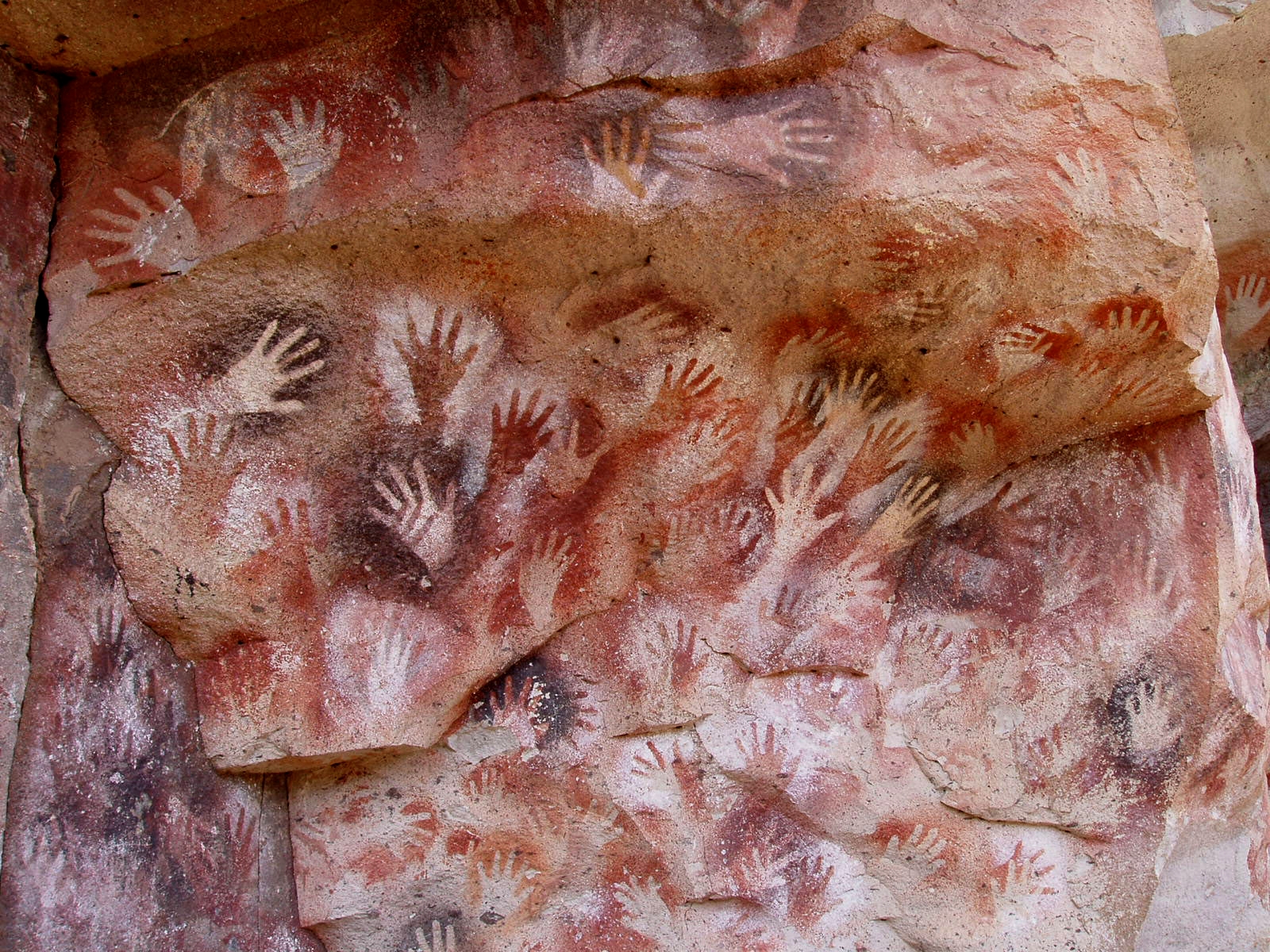
Cueva de las Manos, río Pinturas, en Santa Cruz (Patagonia argentina), 9300 adP

Cueva de las Manos, río Pinturas, en Santa Cruz (Patagonia argentina), 9300 adP


1. Introduction

In this extensive article we try to answer questions such as “who is the human person”; “what does the concept of human dignity rest on”; “what is artificial intelligence”; “whether the person can be reduced to an algorithm”; or whether “artificial intelligence can account for the transcendental character of the human spirit, for its state of transcendental openness to the absolute, given that it is the Absolute itself that produces it”. These questions, and others that will arise along the way, are the subject of this work.

[Read More]

The Human Boundary Between Posthumanism and Transhumanism

The Human Boundary Between Posthumanism and Transhumanism

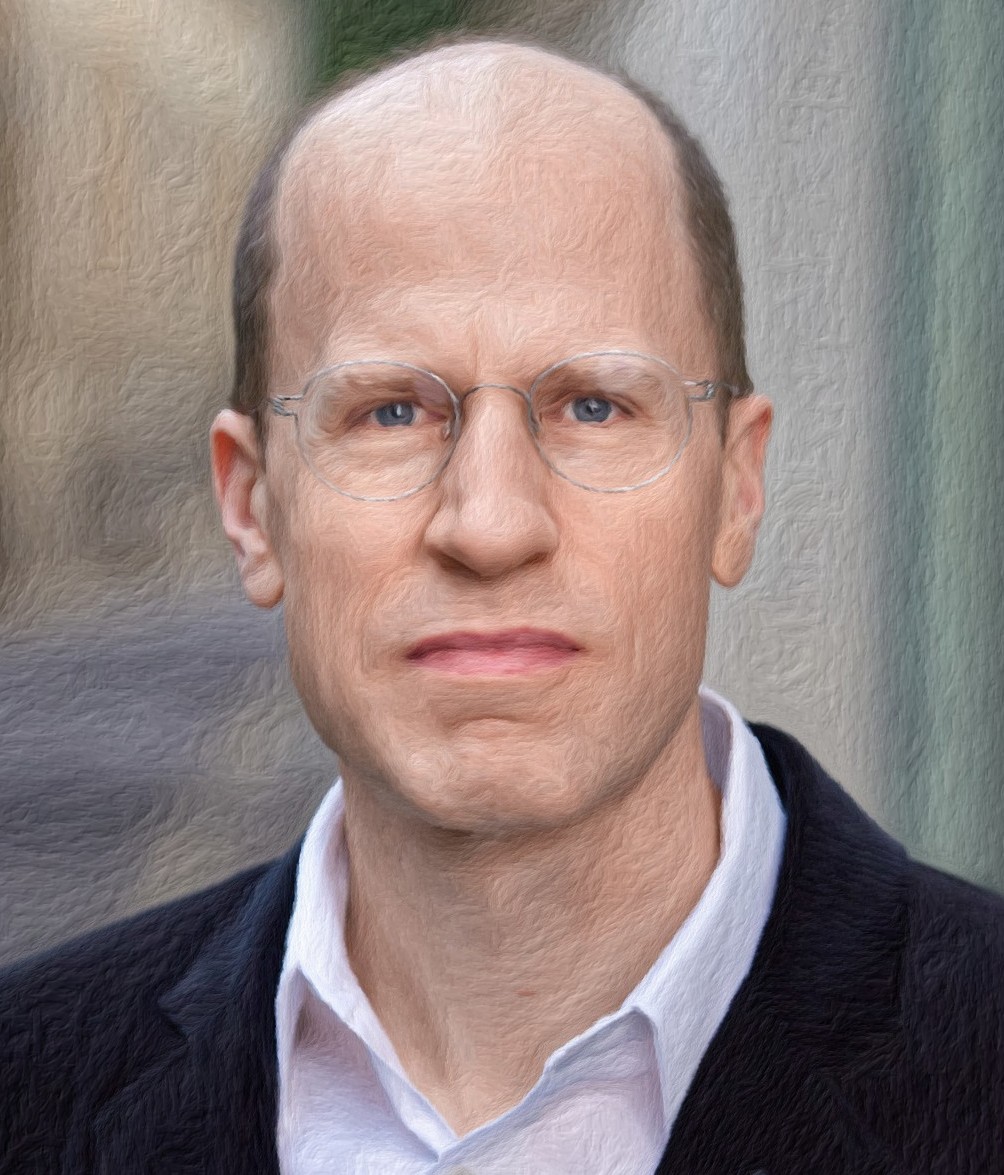
Nick Bostrom, transhumanistic philosopher

Nick Bostrom, transhumanistic philosopher


In his book Why I Want to Be a Posthuman, Swedish philosopher Nick Bostrom describes the posthuman reality as follows: “You’ve just celebrated your 170th birthday and feel stronger than ever. Every day is a joy. (…) You’re communicating with your contemporaries using a language (…) that allows you to share and discuss thoughts and feelings that unenhanced humans couldn’t even conceive of or experience. When you play with your friends, you feel that every fiber of your body and mind is pushed to the limits of creativity and imagination, and you’re creating new realms of abstract and concrete beauty that humans could never (literally) dream of. You’re always ready to empathize with those who are suffering and to work hard to help them get back on their feet. (…) Things are getting better, but every day is already fantastic.”

[Read More]

The Last Carnival Dance

The Last Carnival Dance

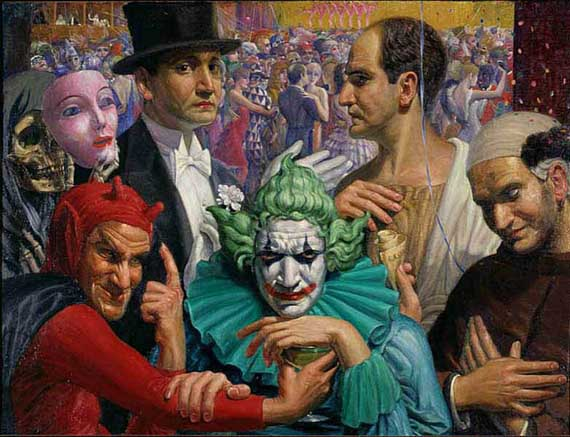
Cesare Sofianopulo, Maschere, 1930, olio su cartone. Trieste, Civico Museo Pasquale Revoltella

Cesare Sofianopulo, Maschere, 1930, olio su cartone. Trieste, Civico Museo Pasquale Revoltella


What is happiness? For much of the West, happiness is living in a society that’s like a massive amusement park—a noisy, colorful world where one can get by by hopping from one digital game to another, always young, always having fun, and always entertaining others. The progress of nations can only aim for this ultimate goal.

[Read More]

Should the human race continue to inhabit the Earth?

Should the human race continue to inhabit the Earth?

There are questions that, because of their radical nature, strike us, prompt us to pause and reflect, and present themselves as valid questions—questions born of authentic thought that opens the way to inquiry and the search for new ideas and perspectives. These are not rhetorical questions, but genuine ones that tap into the desire for truth and point the way forward.

The question that gives this post its title—posed by Pope Leo XIV in the introduction to the book “Disarmed and Disarming” 1—is a crucial question for every person and calls for ethical responsibility. Can the human race continue to inhabit the Earth by recklessly exploiting its resources, plundering it, and applying the logic of domination and profit, while continuing to bring destruction and death through the countless wars that ravage the planet? Does war make sense? What about global rearmament? Is peace possible?

[Read More]

Humanity is not for sale

Toward a Neo-Humanism: A Challenge to Elon Musk's New Republic

Humanity is not for sale

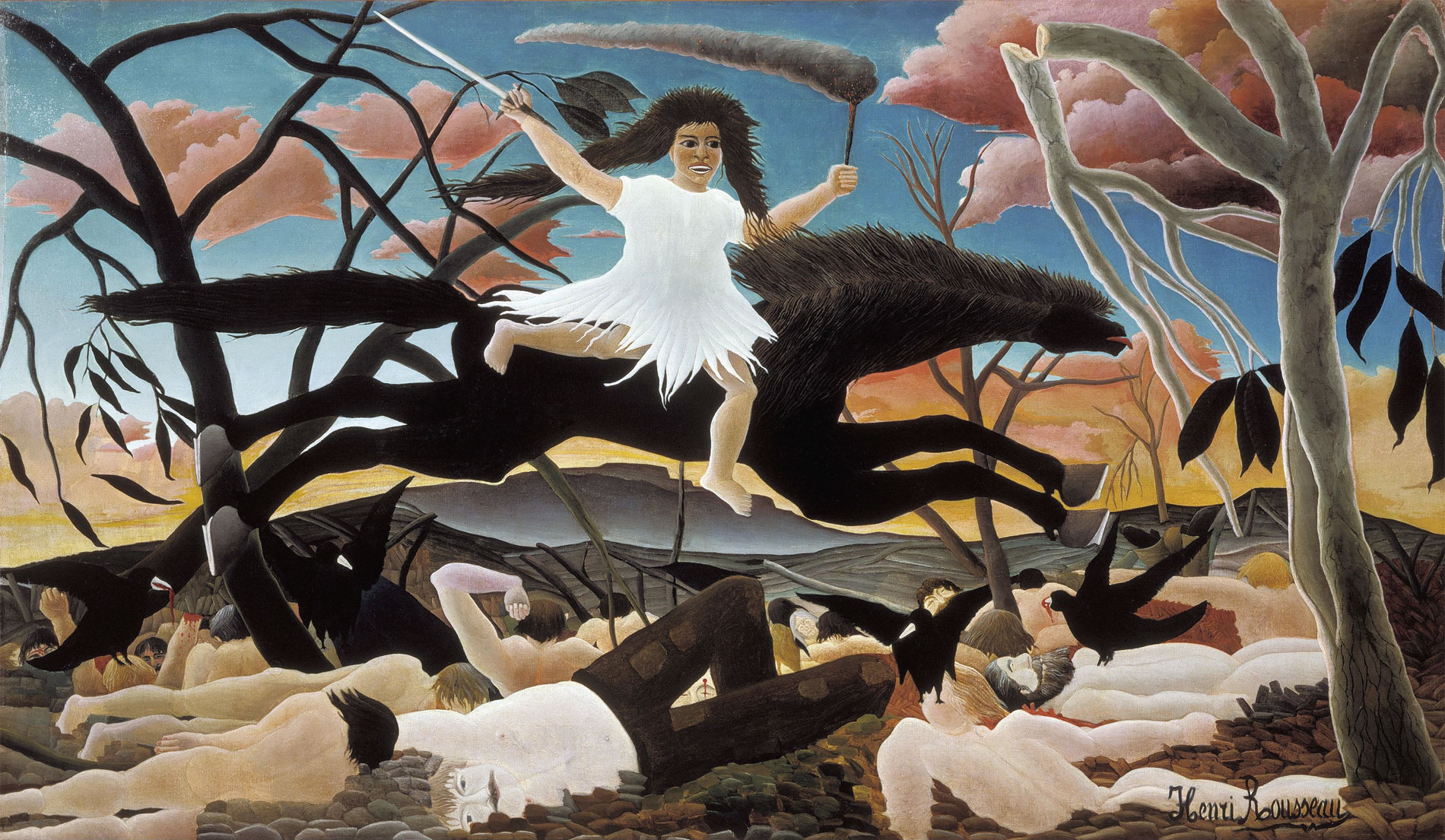
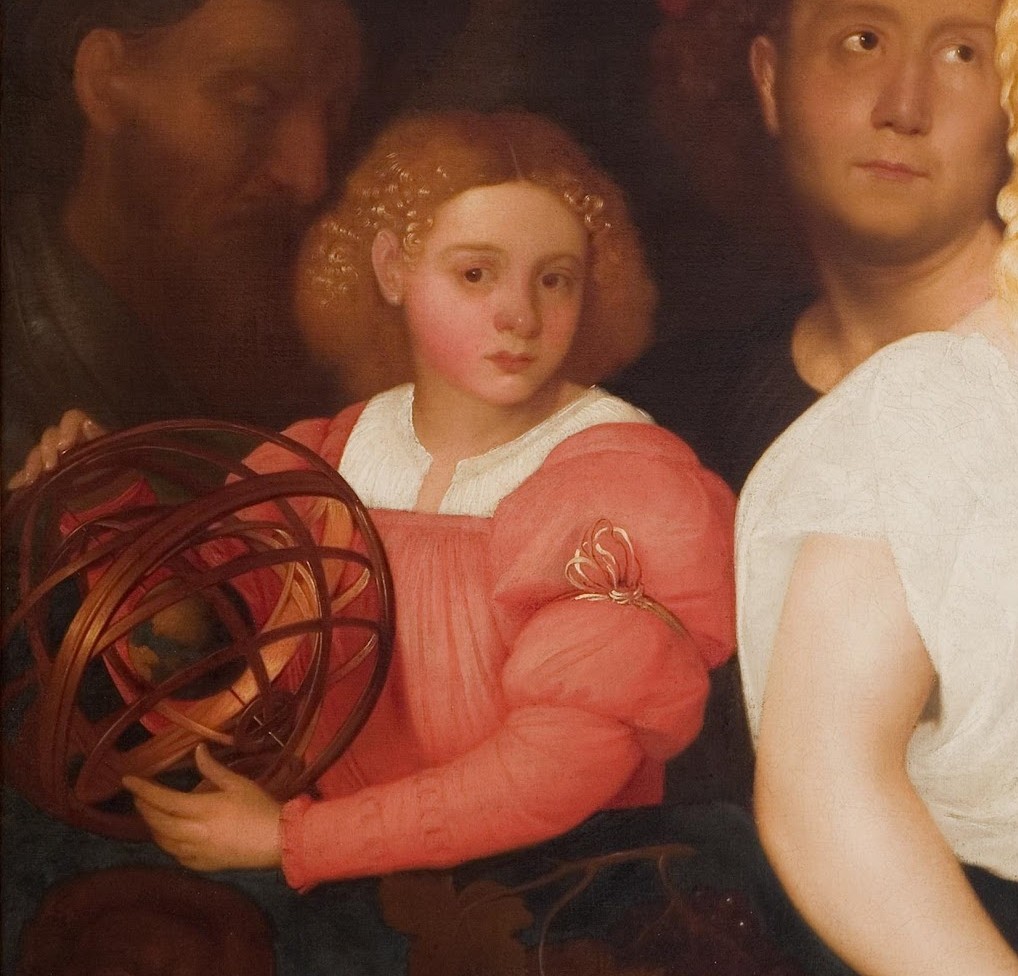
Bernardino Licinio -Allegoria - 1525 - Detail

Bernardino Licinio -Allegoria - 1525 - Detail


In a recent interview with Zanny Minton Beddoes, the Economist’s Editor-in-Chief, Elon Musk was asked what the world will look like in ten years. He replied that it will be dominated by AI whose intelligence surpasses the sum of human intelligence — that “there really won’t be anything AI can’t do better than humans, except perhaps for the humans to be human.” The most likely outcome, he continued, is an “age of amazing abundance where anyone can have anything they can think of,” a “quasi-infinite economy” in which “the magnitude of change is indescribable.” AI and robots, in his telling, will control the production of goods and services, generating more than any human could possibly consume. The only real task left for us, in this vision, is to ensure that AI has good values, cares about humanity, and is maximally truth-seeking and curious.

[Read More]

The family yesterday and today

The Crisis of the Family in Today’s World: General Causes

The family  yesterday  and  today

Some Notes on the Concept of Dignity 1

Being a person is not something added on; it is not a quality or characteristic of the human being: it is the very way in which a human being exists, the very essence of their being. Dignity is not tied to moral, physical, or intellectual qualities, but simply to the fact that the person “is”—to the fact that, as an individual of the human species, they occupy an absolutely special place in creation.

[Read More]

Individualism and Human Rights

Individualism and Human Rights

The Declaration of Human Rights did not stem from any specific philosophical or religious stance, but rather emerged in response to the great horrors of World War II. Since the articles of the Declaration make fairly precise prescriptions regarding the political system, it would not be logical—unless one wishes to fall into circular reasoning—to seek the foundation of the Declaration in the very political ideal it proposes. However, despite this form of “ideological neutrality,” even a first glance at the text reveals some of the document’s underlying assumptions.

[Read More]

The Weight of Freedom III

The Weight of Freedom III

This three part series explores the historic cycles of humanity’s return to a just social order and the nature and role of Freedom in Integral Development through the lens of the mystic inner life. The first and second part in “Essays”

The Inner Life Compels the Work of Integral Development
Now in the image of God, we must next take on the likeness of God and our cares expand exponentially beyond our small scope of self, of family, of community, of nation–to that of all humanity. Beholding all creation from the vantage point of Freedom, we are urged to create. We begin to sense the requisite next action: to bring beauty and order to God’s creation in all its aspects, for every person, and in all creatures, in every system, in every sphere: Integral Development.
This new ultraconscious state is characterized by Absolute Freedom. Absolute Freedom is the consequence of achieving total equilibrium with the Source. It is the natural state that arises, as it is designed to arise, from the path that achieves perfect reflection of the Absolute. It is an emergent state of one who sees the face of God and still lives. It is the purpose of the vesica piscis: the place between from which new creation passes through, where spirit manifests into the physical realm. Behold the birth of the new man, birthing the Earth anew!

[Read More]

Global Public Health Issues

Global Public Health Issues

A dear friend asked me what I think about global public health issues.

My first reaction—considering that I belong to the generation that grew up watching Mike Bongiorno’s Rischiatutto on TV (which was the Italian prototype for television game shows modeled after those from the U.S. in the 1940s and 1950s)—was: “A million-dollar question!”.

Bearing in mind that among the most widely accepted definitions of public health are: “The science and art of improving the health of the population through organized societal efforts” (Acheson, 1988; WHO, 2000), but also: “ The process of mobilizing the local, regional, national, and international resources necessary to ensure the conditions under which all people can be in good health” (Breslow and Detels, 1991), it is clear that we are essentially talking about something very important and very complex, all the more so if the reference framework adopted is the global one—that is, one that concerns the health of all peoples across the entire planet.

[Read More]

The Weight of Freedom: Freedom Emerges from the Inner Life 2

This three part series explores the historic cycles of humanity's return to a just social order and the nature and role of Freedom in Integral Development through the lens of the mystic inner life.

The Weight of Freedom: Freedom Emerges from the Inner Life 2

This three part series explores the historic cycles of humanity’s return to a just social order and the nature and role of Freedom in Integral Development through the lens of the mystic inner life. The first parte in “Essays”

Part II: Freedom Emerges from the Inner Life

Divine design shows us that Freedom is not an a priori condition, but an emergent condition. True Freedom is not a political right granted by a state document, but a spiritual byproduct of a soul coming into purity and alignment with the Divine Design. Freedom, in the divine order, is rather the effect, or the resultant state, of the interior life of prayer, meditation, and union with the Creator. It is the emergent state of a mind in habit of contemplation of Jesus Christ, who is the perfect reflection and living expression, in complete oneness with God the Father. This contemplation of the pure love of Christ for the Father, in turn purifies the interior state of the thoughts of the mind and aims the will toward the desires of God the Father. This contemplation returns our gaze to the Source of Light–whereas, in contrast, humanistic Enlightenment thinking focused our gaze on the outer reaches of any ray of light we so chose to follow away from the Source. Hence the rise of our cancerous multiplicity,1 which of course, we were free to follow.

[Read More]