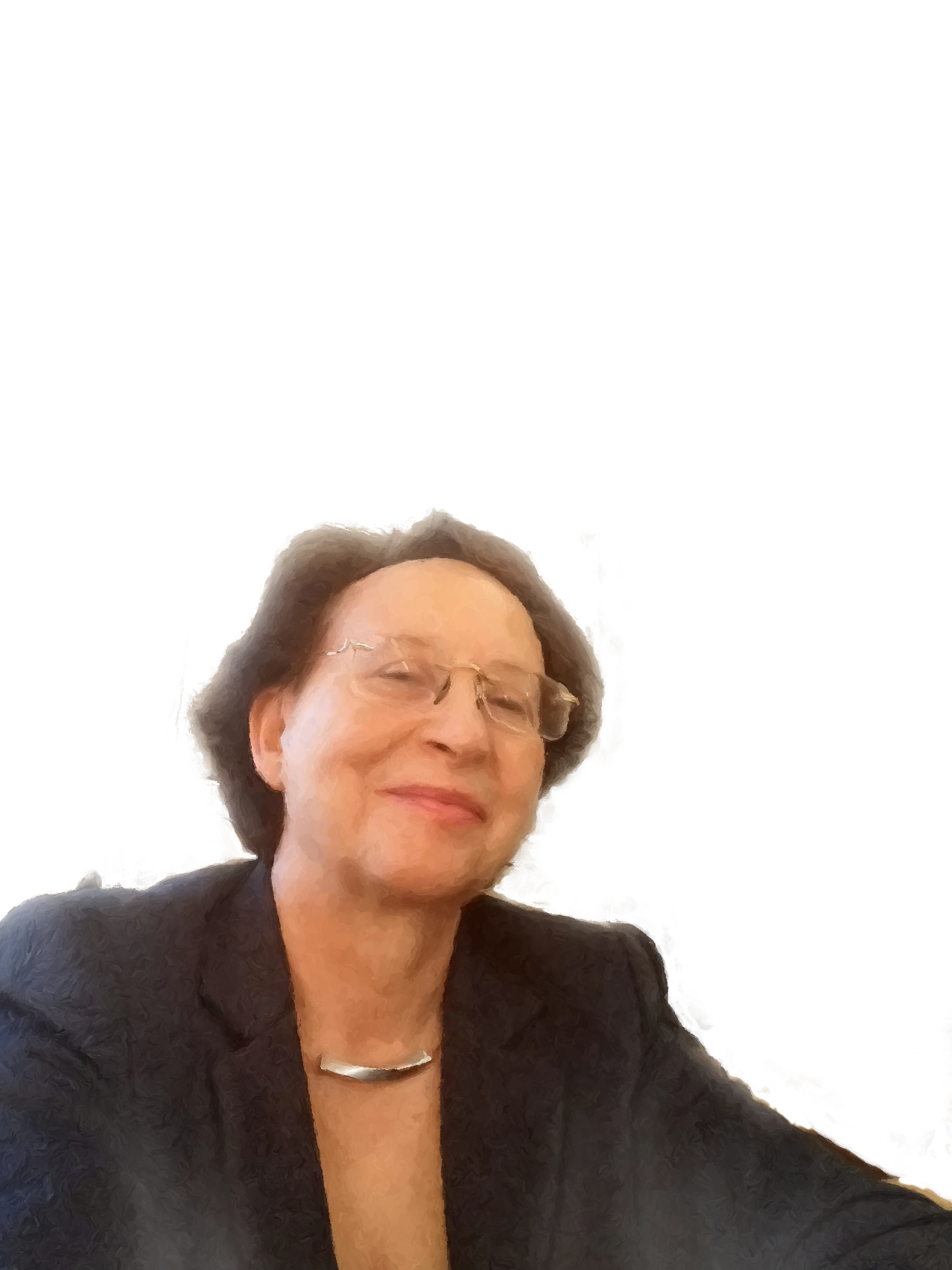
Born in Casarano, in Puglia, she holds a master’s degree in Religious Studies from the Pontifical Lateran University. She is deeply interested in the challenges facing the Catholic Church in the modern world. She lives in Rome.
17 September 2026
In his book "Why I Want to Be a Posthuman", Swedish philosopher Nick Bostrom describes the posthuman reality as follows: “You’ve just celebrated your 170th birthday and feel stronger than ever. Every day is a joy. (…) You’re communicating with your contemporaries using a language (…) that allows you to share and discuss thoughts and feelings that unenhanced humans couldn’t even conceive of or experience. When you play with your friends, you feel that every fiber of your body and mind is pushed to the limits of creativity and imagination, and you’re creating new realms of abstract and concrete beauty that humans could never (literally) dream of. You’re always ready to empathize with those who are suffering and to work hard to help them get back on their feet. (…) Things are getting better, but every day is already fantastic.”
22 August 2026
The question that gives this post its title—posed by Pope Leo XIV in the introduction to the book *“Disarmed and Disarming”* —is a crucial question for every person and calls for ethical responsibility. Can the human race continue to inhabit the Earth by recklessly exploiting its resources, plundering it, and applying the logic of domination and profit, while continuing to bring destruction and death through the countless wars that ravage the planet? Does war make sense? What about global rearmament? Is peace possible?
9 July 2026
The sea, with its multiple meanings, serves as both the focal point and the backdrop in the speech that Pope Leo XIV delivered at the Port of Arguineguín (Las …
18 June 2026
In the Introduction to Pope Leo XIV’s encyclical Magnifica Humanitas, the pope states that magnificent humanity today faces a crucial choice: to decide whether …
29 May 2026
An article published on April 13, 2026, in FQ Magazine by *Il Fatto Quotidiano* tells the story of Katie, a 32-year-old former human resources employee at a company who, according to her own account, overcame postpartum depression by using AI and entrusting the algorithm with complete control over her life. “I described my dream life to the AI, and now I always follow its orders. I don’t trust myself; ChatGPT even decides whether I should wash my hair.” The number of people downloading apps capable of creating custom chatbots—structured with specific data to act as confidants, coaches, and virtual friends—is growing exponentially, especially in the Western world. “AI Companions” offer comfort; they do not judge, do not contradict, remember everything, are charming, usually have a harmonious and gentle tone of voice, and create a “relational bubble” that makes people feel good, accepted, and understood. Young people are increasingly trusting chatbots, making requests that span the most diverse fields: from ethics to medicine to spirituality. The major digital platforms are seeking experts in moral philosophy, anthropology, and theology to provide ethical and wisdom-based information to the algorithms. In virtual relationships, empathy is not necessary, nor is the effort to listen to the other. These interactions between humans and AI using GPT (Generative Pre-Trained Transformer), capable of generating text similar to human speech, raise at least two pressing questions: the definition of the person in their essence and in their distinction from AI, and the evolution of human language in the .....
18 April 2026
The term “Ghosting,” derived from the English word “ghost,” was added to the Treccani dictionary’s list of neologisms in 2024. The definition reads as follows: “Suddenly and without explanation, cutting off all contact with a person, making oneself untraceable.” Digital anthropology and psychology, within their respective fields of scientific inquiry, have described this phenomenon, which has become increasingly widespread in the age of online relationships and causes a painful sense of abandonment in those who experience it. Digital anthropology studies and seeks to understand the impact of information technologies on the human beings who use them. “One of the aims of anthropology, as Gaetano Piccolo S.J. states, is to foster self-understanding in human beings, that is, to activate a process of awareness of the existential and cultural dynamics in which they find themselves living.” In the 1990s, researchers Daniel Miller and Don Slater launched a study to examine the use and influence of the Internet on the inhabitants of the island of Trinidad. Their pioneering studies in digital anthropology contributed to defining the Internet not only as a source of information and knowledge but as a space where individuals develop and experience existing relational dynamics; the people of Trinidad used the web to communicate with distant loved ones, or forged new ones by creating unpredictable forms of connection and new community formations. These findings led to moving beyond the “digital/virtual” and “material/real” dichotomy to highlight the mutual influence of the two spheres. The “real” informs the “digital,” and the “digital” causes the “real” to evolve in new ways. The rapid and pervasive development of digital technologies has profoundly changed culture, the economy, human identity, and interpersonal relationships. For this reason, an increasingly deep understanding of how humans use technologies across various socio-cultural contexts is essential for analyzing the changes occurring in individuals’ mindsets and inner lives. Social networks and social media have become spaces of belonging, social recognition, professional interaction, communication, and the sharing of passions and feelings.
16 March 2026
This famous verse by David Maria Turoldo introduces this brief – and certainly not exhaustive – reflection on ‘justice’, a theme that is often at the heart of …